
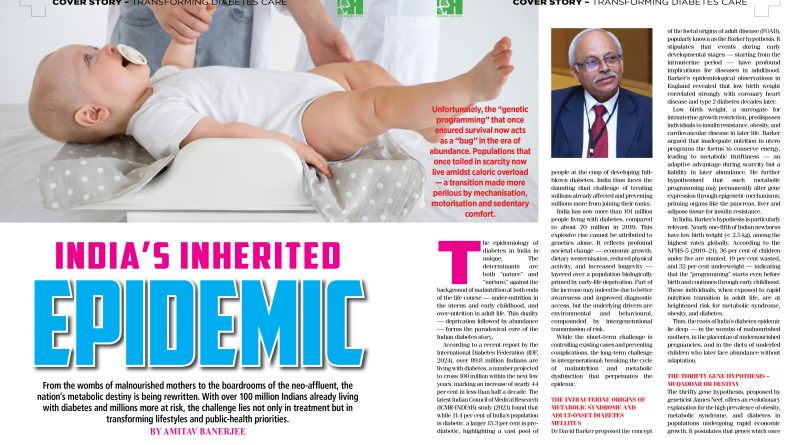
India’s Inherited Epidemic
From the wombs of malnourished mothers to the boardrooms of the neo-affluent, the nation’s metabolic destiny is being rewritten. With over 100 million Indians already living with diabetes and millions more at risk, the challenge lies not only in treatment but in transforming lifestyles and public-health priorities.
By Amitav Banerjee
The epidemiology of diabetes in India is unique. The determinants are both “nature” and “nurture,” against the background of malnutrition at both ends of the life course — under-nutrition in the uterus and early childhood, and over-nutrition in adult life. This duality — deprivation followed by abundance — forms the paradoxical core of the Indian diabetes story.
According to a recent report by the International Diabetes Federation (IDF, 2024), over 89.8 million Indians are living with diabetes, a number projected to cross 100 million within the next few years, marking an increase of nearly 44 per cent in less than half a decade. The latest Indian Council of Medical Research (ICMR-INDIAB) study (2023) found that while 11.4 per cent of India’s population is diabetic, a larger 15.3 per cent is pre-diabetic, highlighting a vast pool of people at the cusp of developing full-blown diabetes. India thus faces the daunting dual challenge of treating millions already affected and preventing millions more from joining their ranks.
India has now more than 101 million people living with diabetes, compared to about 70 million in 2019. This explosive rise cannot be attributed to genetics alone. It reflects profound societal change — economic growth, dietary westernisation, reduced physical activity, and increased longevity — layered over a population biologically primed by early-life deprivation. Part of the increase may indeed be due to better awareness and improved diagnostic access, but the underlying drivers are environmental and behavioural, compounded by intergenerational transmission of risk.
While the short-term challenge is controlling existing cases and preventing complications, the long-term challenge is intergenerational: breaking the cycle of malnutrition and metabolic dysfunction that perpetuates the epidemic.
 The Intrauterine Origins of Metabolic Syndrome and Adult-Onset Diabetes Mellitus
Dr David Barker proposed the concept of the foetal origins of adult disease (FOAD), popularly known as the Barker hypothesis. It stipulates that events during early developmental stages — starting from the intrauterine period — have profound implications for diseases in adulthood. Barker’s epidemiological observations in England revealed that low birth weight correlated strongly with coronary heart disease and type 2 diabetes decades later.
Low birth weight, a surrogate for intrauterine growth restriction, predisposes individuals to insulin resistance, obesity, and cardiovascular disease in later life. Barker argued that inadequate nutrition in utero programs the foetus to conserve energy, leading to metabolic thriftiness — an adaptive advantage during scarcity but a liability in later abundance. He further hypothesised that such metabolic programming may permanently alter gene expression through epigenetic mechanisms, priming organs like the pancreas, liver and adipose tissue for insulin resistance.
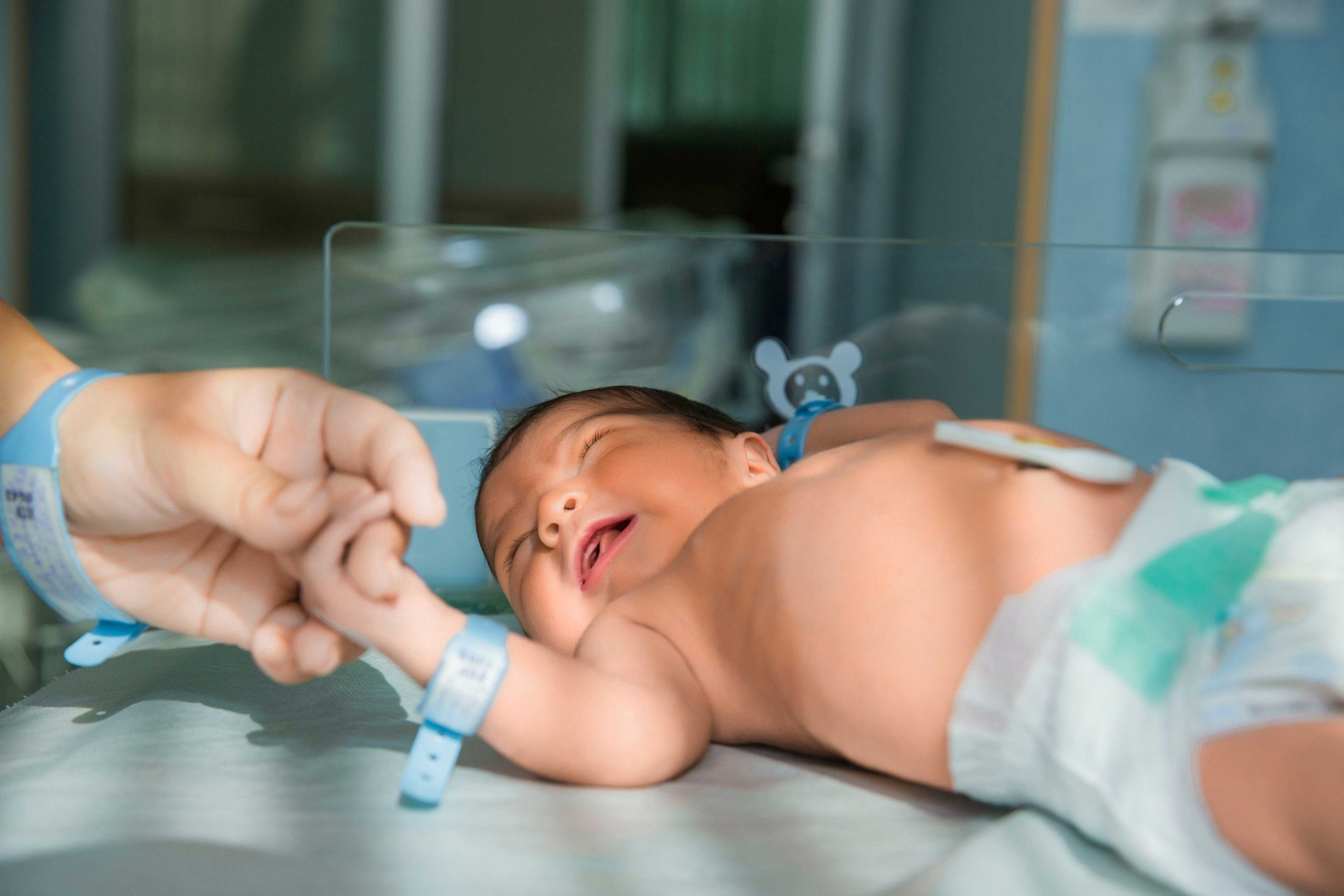
In India, Barker’s hypothesis is particularly relevant. Nearly one-fifth of Indian newborns have low birth weight (< 2.5 kg), among the highest rates globally. According to the NFHS-5 (2019–21), 36 per cent of children under five are stunted, 19 per cent wasted, and 32 per cent underweight — indicating that the “programming” starts even before birth and continues through early childhood. These individuals, when exposed to rapid nutrition transition in adult life, are at heightened risk for metabolic syndrome, obesity, and diabetes.
Thus, the roots of India’s diabetes epidemic lie deep — in the wombs of malnourished mothers, in the placentas of undernourished pregnancies, and in the diets of underfed children who later face abundance without adaptation.
 The Thrifty Gene Hypothesis – Muqaddar or Destiny
The thrifty gene hypothesis, proposed by geneticist James Neel, offers an evolutionary explanation for the high prevalence of obesity, metabolic syndrome, and diabetes in populations undergoing rapid economic growth. It postulates that genes which once promoted fat storage and energy efficiency helped ancient populations survive famine and hardship. However, in times of plenty, the same genes become maladaptive, predisposing to obesity and diabetes.
Populations that endured cycles of deprivation — as India did through multiple historical famines — are thought to carry higher frequencies of such genes. From the catastrophic Bengal famine of 1943 to the Agra and Bihar famines of the 19th century, each episode may have reinforced survival of the “thrifty” genotype. Darwinian selection thus ensured that those best suited to survive scarcity became the majority — a genetic blessing then, but a metabolic curse now.
Unfortunately, this “genetic programming” that once ensured survival now acts as a “bug” in the era of abundance. Populations that once toiled in scarcity now live amidst caloric overload — a transition made more perilous by mechanisation, motorisation and sedentary comfort. This mismatch between evolutionary memory and modern environment underlies much of India’s diabetes epidemic.
While the thrifty gene hypothesis offers an elegant narrative, evidence remains inconclusive. Recent genomic studies reveal that the genetic contribution to diabetes in South Asians is complex, involving multiple small-effect variants, gene-environment interactions, and epigenetic influences rather than a single “thrifty” gene. Nonetheless, the metaphor of inherited thrift powerfully captures the intersection of biology and history in shaping our present metabolic crisis.
 Life Course Strategy to Change the Destiny
As you might have seen the superhit movie “Muqaddar Ka Sikandar”, “Muqaddar” means destiny and “Sikandar” stands for a conqueror. A large proportion of Indians carry a genetic or epigenetic handicap — a destiny — either due to past deprivations like famines or persistent intrauterine and childhood malnutrition. To become Sikandars, to conquer this destiny, we must adopt a life-course approach to diabetes prevention and control.
This approach recognises that interventions must begin before conception — with maternal nutrition, antenatal care, and safe childbirth — and continue through infancy, childhood, adolescence, and adulthood. Each stage offers a window of opportunity to shape metabolic resilience.
The NFHS-5 (2019–21) revealed alarming figures: 36 per cent of children under five stunted, 19 per cent wasted, and 32 per cent underweight — all manifestations of chronic malnutrition. Nearly 20 per cent of newborns have low birth weight, reflecting intrauterine deprivation. These early nutritional insults “program” susceptibility to diabetes in adulthood. Without decisive improvement in maternal and child nutrition, India’s future generations will remain metabolically handicapped.
What about those who could not escape the destiny of early-life malnutrition? They too can resist its consequences through lifestyle and environment — the “nurture” component. The latest evidence from longitudinal studies (Lancet, 2023) confirms that structured lifestyle interventions — including 150 minutes of physical activity per week, a balanced diet rich in fibre and low in refined carbohydrates, and weight reduction — can delay diabetes onset by 40–60 per cent.
Epigenetic studies further suggest that beneficial lifestyle changes can reverse certain gene-expression patterns associated with insulin resistance. In other words, nurture can modify nature.
Diet and exercise, therefore, are not optional — they are the frontline therapy. Many early diabetics and pre-diabetics can attain near-normal glycaemic control through disciplined lifestyle changes alone, sometimes reducing or even discontinuing medication under medical supervision. Since vast swathes of the Indian population are at risk, a population-level approach promoting maternal nutrition, healthy diets, physical activity, and health education will yield the greatest long-term impact.
 Market Forces and Wrong Role Models Are Obstacles to Lifestyle or Population Approach
The greatest obstacle to this life-course approach lies not in biology but in behaviour — and in the market forces that shape it. The newly affluent and middle classes, aspirational yet time-starved, are relentlessly targeted by the fast-food and soft-drink industries. The advertising blitz normalises high-sugar, high-fat consumption while portraying it as a marker of success and modernity.
Popular sportspersons and celebrities endorse cola brands and processed snacks, inadvertently promoting unhealthy habits. Pullela Gopichand remains a rare exception — the Indian badminton champion who refused to endorse soft drinks at the height of his career, believing it inconsistent with fitness and youth values. But such examples are exceptions to the rule. Without policy interventions — taxation on sugary beverages, regulation of junk-food advertising to children, and public-awareness campaigns — lifestyle modification will remain a whisper against the din of marketing.
Secondary Prevention: Taking Care of the Diabetics — The Crucial Role of Primary Care
Primary care must be the cornerstone of diabetes management in India. With endocrinologists in short supply, frontline physicians, family doctors, and health-workers will bear the main responsibility for screening, early diagnosis, counselling, and long-term follow-up.
This is a challenging role. Diabetes management today involves not just medication but complex decision-making: balancing multiple drug classes, preventing hypo- and hyperglycaemia, managing co-morbidities, and ensuring regular monitoring. Primary care systems need upskilling through structured training programmes, continuous medical education, and digital support tools.
Evidence from national surveys shows that less than two-thirds of diagnosed diabetics achieve adequate blood-sugar control. This “treatment gap” contributes to rising complications — kidney failure, cardiovascular disease, neuropathy and blindness — all of which strain public-health resources.
Primary care thus must move from reactive treatment to proactive management — regular follow-ups, foot care, retinal screening, and patient-centred counselling integrated into routine services.
Patient’s Participation in Management of Diabetes
In a chronic disease like diabetes, the patient is both participant and protagonist. No amount of medication can substitute for self-management. Self-monitoring of blood glucose using a simple glucometer (“finger-stick method”) and periodic HbA1c testing (reflecting average blood sugar over three months) remain vital tools.
Recent innovations like continuous glucose monitoring (CGM) — where sensors track blood glucose in real time — have revolutionised management in high-income settings and are slowly becoming available in India. CGM can improve glycaemic control and reduce episodes of hypoglycaemia. However, high cost and limited awareness currently restrict its reach.
Patients must also practise regular foot inspection and care, as diabetic neuropathy and foot ulcers are major causes of disability and amputation. Annual eye examinations for cataract and retinopathy, and periodic renal and cardiac assessments, should form part of comprehensive care. Public-health programmes must integrate these into primary-care packages to ensure accessibility.
Ultimately, sustained lifestyle discipline — exercise, diet, moderation in alcohol, and abstinence from smoking — remains the cornerstone. Behaviour, environment and patient empowerment together can prevent the genotype from expressing its full diabetogenic potential.
Bottom Line
The diabetes epidemic in India mirrors the story of a nation in transition — from famine to feast, scarcity to surplus, activity to inertia. It is a disease born of progress but fuelled by inequality. While genes and history have written part of our “Muqaddar,” the rest lies in our hands. With informed public health policies, empowered primary care, social awareness, and individual responsibility, India can be the “Sikandar” that conquers its destiny.
The battle against diabetes will not be won in laboratories or hospitals alone — it will be won in kitchens, playgrounds, schools, and communities. .
(The author, a renowned epidemiologist, is currently Professor Emeritus at Dr. D.Y. Patil Medical College, Pune, India. He is included in Stanford University’s list of the world’s top 2% scientists for three consecutive years. He is the Founder-Chairperson of the Universal Health Organization, a registered watchdog on public health issues — https://uho.org.in. He is also the author of the book “COVID-19 Pandemic: A Third Eye.”)