
Dubious Shots, Deadly Results

The circulation of fake vaccines poses a grave threat to public health. From refilling discarded vials to exploiting digital platforms, counterfeiters take advantage of gaps in supply chains and regulatory oversight, putting lives at risk and eroding public trust in vaccination.
By Dr Amitav Banerjee
Vaccines are among the most consequential products in modern public health. Unlike an ordinary consumer product, a vaccine is administered directly into the human body, often to healthy people, including infants, pregnant women, older adults, and people with underlying vulnerabilities. The public, therefore, has a legitimate expectation that every vial administered through an authorised programme or healthcare facility is authentic, properly manufactured, correctly stored, and safe to use.
When adulterated, substandard, or spurious vaccines enter circulation, the damage goes far beyond the individual patient: they can undermine immunisation programmes, weaken confidence in science and public institutions, create avoidable disease outbreaks, and impose enormous economic and social costs.
 India has recently faced serious concerns over counterfeit/falsified rabies vaccines, particularly involving the brand Abhayrab. In January 2025, Indian Immunologicals Ltd. reported a counterfeit batch, KA24014, which authorities and international health agencies subsequently warned could have been circulating since November 2023; people who received the affected or unidentified vaccine were advised to seek medical assessment because a counterfeit dose may not provide adequate protection against rabies. In September 2026, Indian regulators identified another suspected falsified Abhayrab batch, KE25012, which was originally seized in April 2026 from an unlicensed premises in Delhi; testing at the Central Drugs Laboratory, Kasauli, found it misbranded and not of standard quality, with significant discrepancies in packaging, labelling, and other identifying features, and the CDSCO directed State Drug Controllers to maintain vigilance. The developments are particularly concerning because rabies is almost invariably fatal once clinical symptoms develop, making the authenticity and potency of post-exposure vaccination critical.
Against this background, India should treat the circulation of adulterated and spurious vaccines as a national public-health security issue, not merely as another category of pharmaceutical crime. India already possesses significant regulatory infrastructure, vaccine-manufacturing capacity, laboratory capability, and one of the world’s largest immunisation supply systems. The challenge lies in making these systems sufficiently transparent, technologically integrated, and enforcement-oriented so that a counterfeit or compromised vaccine becomes extremely difficult to manufacture, distribute, and administer without detection.
Explanation of various categories of dubious vaccines
The issue also requires conceptual clarity. “Adulterated,” “substandard,” “misbranded,” “spurious,” and “falsified” are not interchangeable terms. Under India’s Drugs and Cosmetics Act, 1940, an adulterated drug can include one contaminated or prepared, packed, or stored under unsanitary conditions, or one whose quality or strength has been reduced by the addition of another substance. A spurious drug, by contrast, concerns fraudulent identity or origin—for example, a product made under another drug’s name, an imitation intended to deceive, a product bearing the name of a fictitious manufacturer, or a product falsely purporting to be manufactured by a genuine company. WHO uses the broader terminology of “substandard and falsified” medical products. This distinction matters because the solution to manufacturing contamination is not identical to the solution to deliberate counterfeiting.
The vaccine is a special kind of pharmaceutical product
All medicines require quality control, but vaccines present particular challenges. They are biological products whose potency, purity, sterility, and stability depend upon tightly controlled manufacturing processes. Their effectiveness can also be affected by temperature excursions and inappropriate handling.
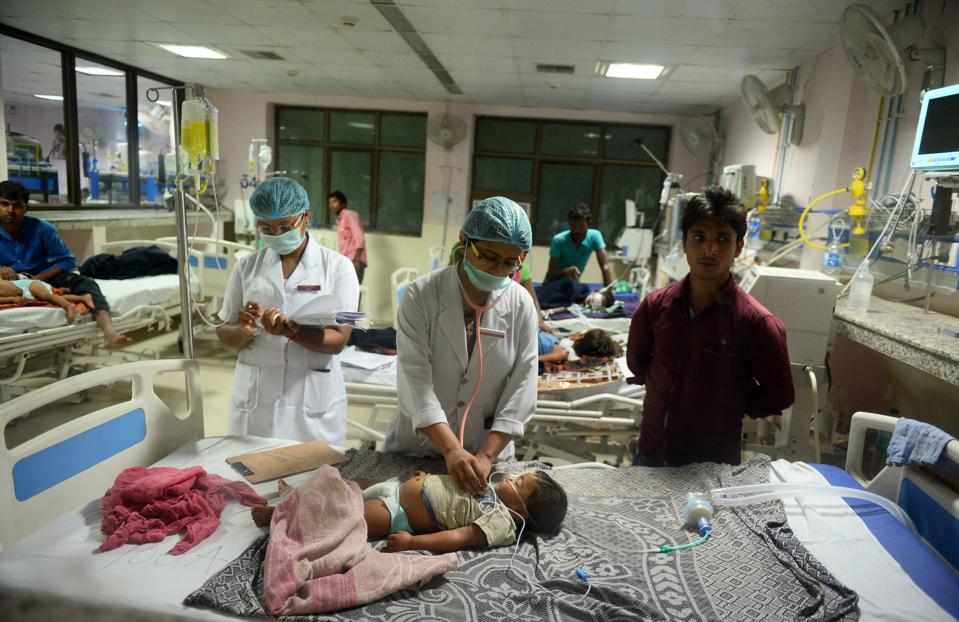 This means that the phrase “fake vaccine” covers several different risks.
At one extreme is a completely fraudulent product: a vial containing an unknown liquid but labelled as a legitimate vaccine. At another is a genuine vaccine that has been improperly stored and has therefore lost quality. There can also be a genuine vial with a falsified label, an altered batch number or expiry date, or a genuine discarded vial that has been refilled. These scenarios have very different origins but share one characteristic: the person receiving the injection cannot reasonably be expected to determine its authenticity simply by looking at it.
That is why vaccine safety cannot depend primarily on consumer vigilance.
A patient might notice poor printing, spelling errors, damaged packaging, or an unusual vial. But sophisticated counterfeits may look remarkably convincing. WHO has specifically warned that falsified vaccines can be difficult to distinguish from genuine products. In one 2021 alert concerning falsified AstraZeneca COVID-19 vaccine, WHO noted that discarded genuine vials could be illicitly refilled and that such products could appear almost indistinguishable from authentic vaccine.
Consequently, the principal defence must be system-level authentication, supported by professional vigilance.
COVID-19 exposed the vulnerability of extraordinary demand (real or panic driven)
The COVID-19 pandemic demonstrated why this subject deserves sustained attention.
During the pandemic, vaccines became scarce and extraordinarily valuable commodities. Governments were attempting to vaccinate enormous populations while manufacturers were expanding production, supply chains were under intense pressure, and the public was urgently seeking protection. That combination created exactly the environment in which fraudsters can attempt to exploit demand.
WHO reported falsified Covishield products in the South-East Asia and African regions in 2021, including products reported at patient level in India. The genuine manufacturer, Serum Institute of India, confirmed that the products identified in the alert were falsified. Among the indicators were falsified expiry information, an incorrect presentation, and falsified batch details.
This is not merely a historical curiosity. India’s own Central Drugs Standard Control Organization subsequently documented multiple samples of purported Covishield vaccines that were declared spurious. Its published records for 2022 included samples with falsified batch information and an unlabelled vial purported to contain a COVID-19 vaccine; cases were investigated and prosecuted.
The lesson is not that India’s entire vaccination system was unsafe. Quite the opposite: the existence of regulatory detection and laboratory confirmation demonstrates that surveillance mechanisms can work. The lesson is that even during a massive government-controlled vaccination effort, criminal actors can attempt to penetrate the system or exploit parallel channels.

WHO’s contemporary guidance was also reassuring in an important respect: people receiving vaccines through regulated and controlled supply chains were at substantially lower risk. The appropriate response was not panic, but vigilance, authentication, and strong supply-chain controls.
The difference between adulteration and counterfeiting matters
Public debate often uses “adulteration” as a catch-all term. That can obscure where intervention is required.
Adulteration is primarily a quality and safety problem. A product may contain harmful contaminants, be manufactured in unhygienic conditions, contain an inappropriate substance, or have its strength reduced. Such failures may arise through negligence, inadequate manufacturing controls, deliberate fraud, or some combination.
Substandard products are products that fail to meet established quality standards or specifications, whether or not fraud is involved.
Misbranding involves false or misleading presentation or labelling.
Spurious or falsified products involve deliberate deception about identity, composition, or source.
A manufacturer whose batch accidentally fails a specification is not necessarily a counterfeiter. Conversely, a criminal enterprise selling a perfectly sterile vial filled with an unrelated substance and labelled as a prestigious vaccine is not simply making a “low-quality vaccine”; it is committing deliberate fraud.
The distinction is important because a strong national strategy needs both quality assurance and criminal investigation.
India’s regulatory architecture is substantial—but enforcement must remain relentless
India has a long-established statutory framework governing drugs. The Drugs and Cosmetics Act defines adulterated and spurious drugs and provides serious penalties. For spurious drugs not falling into the most serious harm category, Section 27 provides for imprisonment that can extend to life imprisonment, with specified minimum terms and fines; where adulterated or spurious drugs are likely to cause death or grievous hurt, the penalties are considerably more severe.
This sends an appropriate legal message: pharmaceutical counterfeiting is not an ordinary commercial offence.
But laws alone do not guarantee safety.
The effectiveness of regulation depends on inspections, sampling, laboratory capacity, intelligence gathering, prosecution, inter-state cooperation, and the speed with which dangerous products are recalled.
The CDSCO’s current alert system is therefore important. Its public database contains regular listings of drugs, medical devices, vaccines, and cosmetics declared spurious or not of standard quality. The system provides a mechanism through which regulators and the public can see that quality failures are being detected rather than hidden.
The challenge is to ensure that detection is followed by rapid containment.
A vaccine batch should not remain in circulation for weeks while regulators determine who has received it. Once a credible signal emerges, the system should be capable of moving rapidly from detection – verification – quarantine – recall – patient notification – clinical follow-up – investigation.
The supply chain demands Hazard Analysis & Remedial Action at Critical Points
A counterfeit vaccine does not spontaneously appear inside a vaccination centre. It has to move through a chain.
Manufacturing facilities, warehouses, transporters, distributors, wholesalers, hospitals, clinics, pharmacies, and vaccination sites all represent potential points of vulnerability.
WHO notes that substandard and falsified products commonly exploit weak links in long supply chains. They can enter through intermediaries whose credentials are not adequately checked, and increasingly sophisticated online commerce can create additional channels outside regulated distribution.
India’s immunisation programme already has a major advantage: it has built sophisticated vaccine logistics infrastructure.
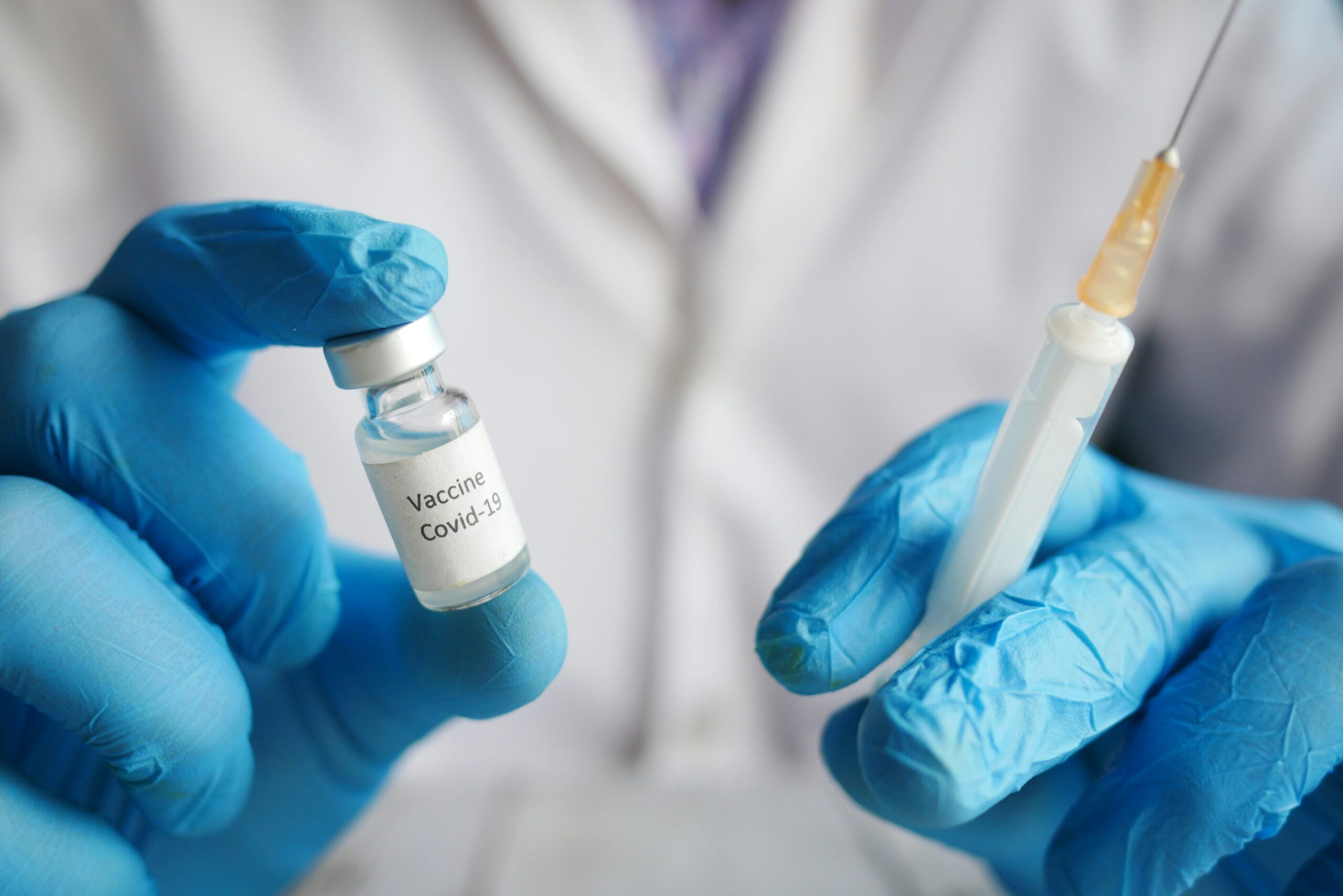 The National Cold Chain and Vaccine Management Resource Centre functions as a technical resource centre for India’s immunisation supply chain. The country’s Electronic Vaccine Intelligence Network, or eVIN, provides information on vaccine stock and storage conditions, while the broader cold-chain system monitors storage equipment and temperatures.
But there is an important distinction between tracking a vaccine’s location and proving its identity. Knowing that “100 vials of vaccine X were sent from warehouse A to district B” does not necessarily establish that every physical vial in district B is genuine. The next generation of vaccine security should therefore integrate inventory management with individual-product authentication.
From batch tracking to dose-level authentication
India should progressively move toward a system in which every vaccine pack has a secure digital identity that can be checked throughout the legitimate supply chain.
A robust system could combine:
Secure serialisation;
Tamper-evident packaging;
Machine-readable codes;
Batch and expiry verification;
Manufacturer authentication;
Temperature-history information where technically appropriate;
Automated alerts for duplicated or suspicious serial numbers;
Electronic records connecting procurement, distribution, and administration;
Rapid recall functionality.
The objective should not be to burden vaccinators with unnecessary paperwork. Technology should reduce administrative work while increasing security.
India has already recognised the value of digital traceability more broadly. In a 2026 intervention to the WHO Executive Board, India stated that it has implemented risk-based inspections and enhanced market surveillance, maintains a national drug track-and-trace system for exported pharmaceutical products, and is progressively strengthening domestic traceability.
That direction is welcome. The logical next step is to make traceability increasingly comprehensive for high-risk biological products, including vaccines.
The cold chain is not the same as authenticity—but it is part of authenticity assurance
Another common misunderstanding is to treat counterfeit prevention and cold-chain management as separate issues.
They are distinct, but interconnected.
A genuine vaccine that is stored outside its required conditions may no longer provide the expected protection. Conversely, a perfectly maintained cold chain cannot make a counterfeit vaccine genuine.
India has made significant investments in cold-chain infrastructure. The government’s 2024–25 reporting notes that the National Cold Chain Management Information System tracks equipment availability and performance, while Effective Vaccine Management assessments are used to identify gaps and improve supply-chain performance. The national EVM score increased from 68 per cent in 2018 to 82 per cent in 2022.
These systems should increasingly be integrated with product authentication.
Imagine a vaccine vial whose identity, batch, expiry, storage history, and administration record could be verified through a secure system. A suspicious vial could then generate an alert before it reaches a patient’s arm.
Cybercriminals have entered the vaccine and drugs counterfeit market
The digital economy has brought enormous benefits to healthcare, but it has also created new avenues for medical fraud.
A person searching online for a scarce or expensive vaccine may encounter websites, social-media accounts, messaging groups, or informal brokers claiming to offer genuine products. During periods of shortage or panic, consumers may become particularly vulnerable.
WHO has repeatedly warned about medical products offered through unauthorised websites. It advises people to be cautious about websites that conceal physical addresses or other basic identifying information and to obtain medical products through authorised channels.

India therefore needs a stronger partnership between drug regulators, cybercrime authorities, customs, police, online platforms, payment companies, and manufacturers.
The regulator should not have to discover a fake vaccine website after thousands of consumers have already interacted with it.
There should be mechanisms for rapid detection, takedown, investigation, and public warning.
At the same time, enforcement should distinguish between legitimate online healthcare services and fraudulent sellers. The objective is not to push patients away from digital healthcare, but to make legitimate digital commerce safer.
The most dangerous counterfeit may be the one that looks genuine
One of the greatest misconceptions is that fake products are necessarily crude. They are not.
Modern printing, packaging, and digital design can make counterfeit packaging highly convincing. A falsified product can carry a genuine-looking logo, batch number, manufacturer name, and expiry date.
This is why public education campaigns that simply tell people to “look carefully at the vial” have limited value. Consumers should certainly be encouraged to report suspicious packaging, but the deeper solution must be institutional.
Hospitals and vaccination centres should procure only through authorised channels. Staff should know how to recognise suspicious products. Manufacturers should provide regulators with secure authentication methods. Distributors should maintain documented chain-of-custody records. Empty vaccine vials should be disposed of in ways that make unauthorised reuse difficult.
WHO’s warning about refilled COVID-19 vaccine vials illustrates the point: improper disposal of empty genuine vials can itself create a counterfeit opportunity.
Waste management, therefore, becomes part of vaccine security.
The country’s reputation as the pharmacy of the world is also at stake
There is another dimension that deserves more attention: India’s position as a major global pharmaceutical and vaccine producer.
India supplies medicines and vaccines to numerous countries. Its vaccine manufacturers have developed substantial international reputations and manufacturing capabilities.
Consequently, counterfeit products carrying the name of an Indian manufacturer do two kinds of damage.
First, they can harm patients. Second, they can damage the reputation of legitimate Indian manufacturers. This makes combating counterfeiting a matter not only of domestic public health but also of India’s international economic and diplomatic interests.
At the same time, India should be careful not to confuse isolated criminal counterfeiting with legitimate manufacturing failures. Transparency is essential. If a genuine product fails a quality specification, regulators should communicate the facts accurately. If a counterfeit merely uses a company’s name, the company should not be portrayed as having manufactured it. Precision in communication is part of maintaining public confidence.
Public trust is the most valuable asset—and the easiest to damage
A vaccine programme ultimately depends on trust. People must trust that the vaccine is what the label says it is. They must trust the healthcare worker administering it. They must trust the regulator. They must trust that adverse events will be investigated honestly. And they must trust that authorities will tell them when something goes wrong. A counterfeit vaccine threatens all four layers simultaneously.
If one person receives a fake product and later develops the disease the vaccine was supposed to prevent, the individual may conclude that the vaccine itself “does not work.” If the story spreads on social media, thousands of people may begin questioning legitimate vaccination. This is why the harm from a single falsified vial can be disproportionately large.
WHO explicitly identifies the erosion of confidence in healthcare systems as one of the harms associated with substandard and falsified medical products. The appropriate communications strategy should therefore be neither denial nor sensationalism.
If a counterfeit batch is found, authorities should say:
What was detected;
Where it was found;
Whether it entered an authorised programme;
What batch numbers are affected;
What action has been taken;
Whether anyone received the product;
What affected individuals should do;
What is known and what remains under investigation.
That is how trust is protected.
Regulation should become more intelligence-led
Traditional pharmaceutical inspection often involves periodic inspections and laboratory sampling. These remain essential, but modern counterfeiting requires an intelligence-led approach.
Regulators should identify high-risk products, suppliers, and routes.
For example, unusual purchasing patterns, large volumes of a scarce vaccine, price anomalies, unexplained movement of stock, repeated batch-number duplication, or products appearing outside authorised distribution networks should trigger investigation.
India’s recent emphasis on risk-based inspection and market surveillance is therefore particularly relevant.
Regulators should also combine information from different sources rather than treating every signal separately.
A hospital complaint, a customs seizure, an online advertisement, and a suspicious batch number might appear unrelated when viewed independently. An integrated intelligence system could reveal that they are connected.
This is where artificial intelligence and data analytics could eventually become useful—not as replacements for laboratory science or regulatory judgment, but as tools for identifying patterns that humans might miss.
Laboratories are the final line of defence
No digital system eliminates the need for laboratory testing.
When a suspicious vaccine is identified, laboratories may need to determine whether the contents match the declared product, whether potency and identity are consistent with specifications, whether contamination is present, and whether the packaging and label correspond to the manufacturer’s records.
India already has a network of drug-testing laboratories, and the CDSCO regularly publishes laboratory-based quality alerts. The regulator’s current public alert system demonstrates that laboratory surveillance remains an important component of enforcement.
The priority should now be to make laboratory testing faster.
A counterfeit vaccine discovered in one city should trigger rapid information sharing across the country. Laboratories should have validated methods for high-risk biological products and access to reference materials and manufacturer cooperation.
Speed matters because every hour between detection and containment represents an opportunity for further distribution.
Accountability must reach beyond the person holding the vial
Counterfeit medical products are often discussed as if the culprit is simply a small illegal manufacturer.
The reality can be more complicated. A supply chain may involve brokers, distributors, transporters, warehouse operators, corrupt insiders, forged documentation, and online sellers. If enforcement captures only the final seller, the network can reappear under another name.
India therefore needs investigations that follow the money, materials, communications, and logistics behind counterfeit vaccines.
The legal framework already provides severe penalties for serious spurious-drug offences. But the effectiveness of deterrence depends on the certainty and speed of detection and prosecution, not merely on the theoretical maximum sentence. A ten-year sentence written in a statute does little to deter a sophisticated criminal network if the probability of detection is perceived to be low. The policy objective should therefore be: detection + rapid investigation + strong prosecution + asset seizure + appropriate punishment.
Manufacturers also have responsibilities
It would be unfair to place the entire burden on government. Manufacturers should invest in anti-counterfeiting technology, secure packaging, and supply-chain visibility. They should maintain robust records that allow regulators to verify whether a particular batch, vial, or serial number is genuine. Manufacturers should also have rapid-response systems for suspected counterfeits. If a hospital sends a suspicious vial to a company, the response should not take weeks.
The company should be able to say rapidly whether the product corresponds to a genuine batch and whether the packaging matches its specifications. The pharmaceutical industry should view anti-counterfeiting technology not merely as a regulatory cost but as part of product quality.
Recommendations for a National Strategy to check this menace
India should build a National Vaccine Authentication and Security Framework around seven principles:
Authenticate every high-risk vaccine: Every vaccine should progressively carry a secure, machine-readable identity that can be checked through authorised systems.
Integrate supply-chain data: Procurement, distribution, cold-chain records, batch information, and administration data should be interoperable wherever privacy and security requirements permit.
Strengthen risk-based surveillance: Sampling should be concentrated where the risk of falsification or degradation is highest, rather than relying exclusively on uniform inspection.
Establish rapid recall mechanisms: When a suspicious batch is identified, affected products should be traceable quickly and removed from circulation.
Strengthening the roles of border and cybercrime agencies: Customs, police, cybercrime units, CDSCO, state regulators, and online platforms should cooperate against illicit vaccine distribution.
Protection of whistleblowers: Healthcare workers, distributors, and employees who identify suspicious products should have safe channels for confidential reporting.
Transparency: The public should receive factual information quickly, without exaggerating the scale of a problem and without minimising legitimate risks.
Creating awareness among the general public about ways to avoid getting conned
Patients should receive vaccines through authorised vaccination programmes, hospitals, or licensed healthcare providers. They should be suspicious of vaccines offered through informal channels, unusually cheap offers, anonymous online sellers, or products that cannot be authenticated.
WHO recommends obtaining medical products from authorised sources and seeking professional advice if a product appears suspicious or causes an unexpected problem.
A patient cannot reasonably be expected to determine whether a microscopic difference in a label indicates a counterfeit. The system should be designed so that the safest choice is also the easiest choice.
Lessons from the COVID-19 Pandemic
The extraordinary counterfeit-vaccine risks seen during COVID-19 should not be remembered merely as an unusual feature of 2021. They should be treated as a case study in what happens when demand, scarcity, fear, and criminal opportunity converge.
WHO’s alert history shows that falsified COVID-19 vaccines appeared in multiple regions during the pandemic, including falsified Covishield reported in India and falsified Pfizer-BioNTech and AstraZeneca products reported elsewhere. The next public-health emergency may involve a different disease and a different vaccine. The lessons remain the same.
Takeaways
Adulterated and spurious vaccines represent one of the most serious forms of pharmaceutical fraud because they attack both the individual patient and the public-health system simultaneously.
The physical harm can be immediate: exposure to an unknown or contaminated substance, failure to receive the intended protection, delayed treatment or immunisation, and potentially severe medical consequences. But the psychological and societal consequences can be even broader. A counterfeit vaccine can generate stories of “vaccine failure,” feed misinformation, reduce confidence in immunisation, and undermine years of public-health work.
India should therefore adopt a philosophy of zero tolerance combined with maximum transparency.
Zero tolerance means that deliberate manufacture, trafficking, and administration of spurious vaccines must attract serious regulatory and criminal consequences. It means investing in inspections, laboratories, secure packaging, digital traceability, intelligence-led enforcement, and cross-border cooperation.
But zero transparency would be equally dangerous. Authorities must not hide detected problems out of fear that publicising them will damage confidence. Responsible disclosure, rapid containment, and honest communication ultimately strengthen confidence.
India has many of the necessary foundations already in place. CDSCO operates a national regulatory framework and publishes quality alerts; the country has specialised vaccine oversight and pharmacovigilance mechanisms; the immunisation programme has extensive cold-chain infrastructure; eVIN provides real-time visibility into vaccine stocks and storage conditions; and India is increasingly emphasising risk-based inspection and domestic traceability.
The task now is to connect these strengths into a genuinely integrated vaccine-security system.
The ultimate goal should be simple: from the moment a vaccine leaves an authorised manufacturer to the moment it enters a patient’s body, its identity, quality, custody, and storage should be demonstrable.
A country that can manufacture vaccines at enormous scale should also be able to make counterfeit vaccines exceptionally difficult to manufacture, distribute, and administer. That is not merely a regulatory aspiration. It is a basic obligation to every citizen who places their health—and often their child’s health—in the hands of the vaccination system. The fight against spurious vaccines is therefore not a fight against vaccination. It is a fight to protect the integrity of vaccination itself.
(The author is a renowned epidemiologist and Professor Emeritus at D Y Patil Medical College, Pune. Having served as an epidemiologist in the armed forces for over two decades, he ranked in Stanford University’s list of the world’s top 2 per cent scientists for three consecutive years [2023–25]. He has penned the book, “Covid-19 Pandemic: A Third Eye”.)