
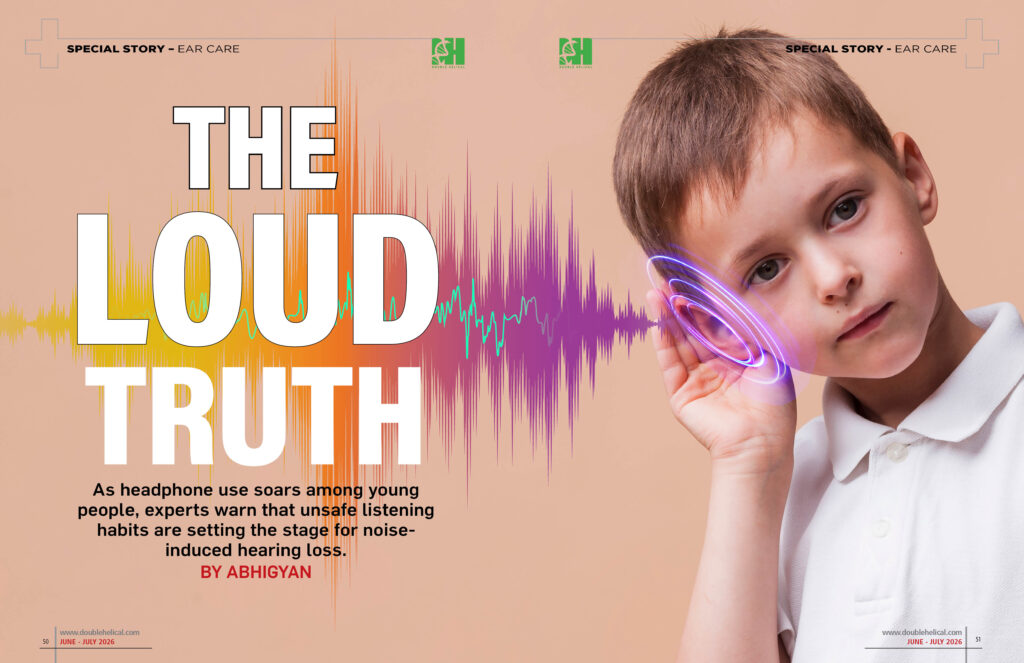
The Loud Truth
As headphone use soars among young people, experts warn that unsafe listening habits are setting the stage for noise-induced hearing loss.
By Abhigyan
A comprehensive new study published in Otolaryngology–Head and Neck Surgery, the peer-reviewed journal of the American Academy of Otolaryngology–Head and Neck Surgery Foundation, reveals alarming rates of hearing loss among adolescents. The research, part of the Generation R Study—one of the world’s largest birth cohorts—followed 3,347 Dutch adolescents through standardised hearing assessments at ages 13 and 18. It found that by age 18, 6.2 per cent had sensorineural hearing loss and 12.9 per cent showed signs of probable noise-induced hearing damage.
 While overall prevalence rates remained relatively stable during this five-year period, the study uncovered concerning trends: bilateral hearing notches became more common, and among those already showing high-frequency hearing loss at age 13, their hearing deteriorated significantly by age 18. These findings underscore the urgent need for prevention, early monitoring, and public education.
According to the WHO (World Health Organization), hearing loss has potentially devastating consequences for physical and mental health, education, and employment.
The WHO recommends that young people limit the use of personal audio devices to one hour a day in an effort to limit exposure to noise. A report recommends a safe headphone listening volume of 85dB. Although headphones are not sold with SPL meters, they can be purchased separately. One could take note of the volume control setting that pumps out 85dB; any music recorded at a higher level would still play back at dangerous levels. The headphones would have to be recalibrated whenever the music changed. While in-the-ear earphones can produce higher sound levels than over-the-ear earphones, they are not necessarily used at higher levels.
 According to Dr A K Agarwal, Renowned ENT Surgeon, Professor of Excellence, and Medical Advisor (Innovation and Clinical Research), Apollo Group of Hospitals, New Delhi, the harmful effects of listening through any type of headphone, including mobile phone, will depend upon two factors: first, total duration, and second, intensity of sound. Using headphones for more than three hours a day over a prolonged period has been found to bring auditory and non-auditory harmful impact on the body.
Says Dr A K Agarwal, “Hearing damage from headphones is probably more common than from loudspeakers, even at comparable volumes, due to the close coupling of the transducers to the ears. There are many symptoms of hearing damage, like ringing or buzzing in the ears, difficulty in understanding speech, slight muffling of sounds, and difficulty understanding speech in noisy places or places with poor acoustics. The distance from the source of the sound and the period of time are also important factors in protecting your hearing. Unsafe levels of sounds can be, for example, exposure to in excess of 85 decibels (dB) for eight hours or 100dB for 15 minutes.”
 Dr Ravi Meher, HOD, Department of ENT, Maulana Azad Medical College, New Delhi, says that teenagers and young people can better protect their hearing by keeping the volume down on personal audio devices, wearing earplugs when visiting noisy venues, and using carefully fitted, and, if possible, noise-cancelling earphones/headphones. They can also limit the time spent engaged in noisy activities by taking short listening breaks and restricting the daily use of personal audio devices to less than one hour. With the help of smartphone apps, they can monitor safe listening levels. Sound pressure is measured in decibels, and exposures to 75dB (even after long exposure) are usually safe. However, long or repeated exposures to sounds at above 85dB can cause hearing loss. The louder the sound, the less time it takes for noise-induced hearing loss (NIHL) to happen.
Dr A K Agarwal observes, “Mobile phone is an excellent communication device. Mobile radiation effects occur only if the device is used for a prolonged time. Try to consider the mobile phone as a communication device, not an entertainment device. The human ear has a peak sensitivity of 3000 Hz, which causes a sense of unease. A sound of this frequency is very penetrating and causes a phantom pain in the ear without specific causes such as infection. This may be due to increased stress on the delicate structures of the internal ear or eardrum by the radiation. Using headphones at a sufficiently high-volume level may cause many hearing problems including damage to the cochlear structure in the inner ear, which gives rise to temporary or permanent hearing impairment or deafness.”
“The risk is higher especially in loud places, as volume often needs to compete with the background noise. For example, the average sound level on a busy street is about 80dB. In the Aero study, when the outdoor noise was a mere 65dB, listeners raised headphone volume levels to over 80dB in 1997. This figure shows the average chosen listening levels for our subjects across the different background noise levels in 2006. When we experience sound in our environment (TV, radio, traffic), normally these sounds are at safe levels. However, long periods of exposure to high sound pressure levels at high volume can be damaging to sensitive structures in the inner ear and cause NIHL,” Dr Agarwal adds.
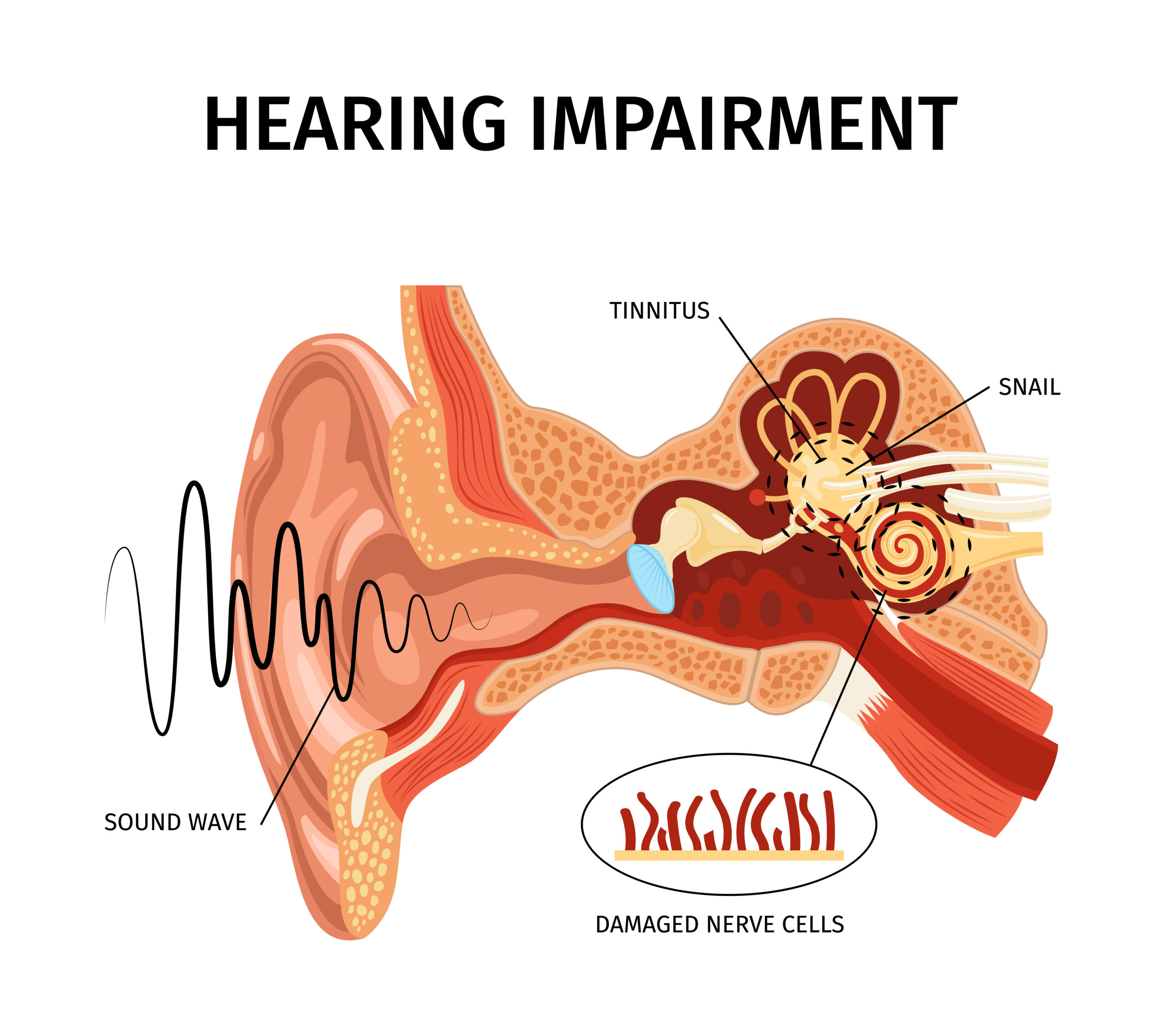
Experts believe that very loud noise can cause permanent hearing loss. Listening to loud noise for long periods of time can damage the hair cells in the inner ear. NIHL usually develops gradually and painlessly. A single exposure to an extremely loud sound such as an explosion can cause a sudden loss of hearing. This is called acoustic trauma.
 Safe listening depends on the intensity or loudness of sound, and the duration and frequency of listening. Exposure to loud sounds can result in temporary hearing loss or tinnitus, which is a ringing sensation in the ear. When the exposure is particularly loud, regular, or prolonged, it can lead to permanent damage of the ear’s sensory cells, resulting in irreversible hearing loss.
Governments also have a role to play by developing and enforcing strict legislation on recreational noise, and by raising awareness of the risks of hearing loss through public information campaigns. Parents, teachers, and physicians can educate young people about safe listening, while managers of entertainment venues can respect the safe noise levels set by their respective venues, use sound limiters, and offer earplugs and ‘chill-out’ rooms to patrons. Manufacturers can design personal audio devices with safety features and display information about safe listening on products and packaging.
“Make Listening Safe” Initiative
To mark International Ear Care Day, celebrated each year on March 3rd, WHO launched the “Make Listening Safe” initiative to draw attention to the dangers of unsafe listening and promote safer practices. In collaboration with partners worldwide, WHO aims to alert young people and their families about the risks of NIHL and advocates for greater government attention to this issue as part of their broader efforts to prevent hearing loss generally.
Worldwide, 360 million people today have moderate to profound hearing loss due to various causes, such as noise, genetic conditions, complications at birth, certain infectious diseases, chronic ear infections, the use of particular drugs, and ageing. It is estimated that half of all cases of hearing loss are avoidable. To address this issue, WHO collates data and information on hearing loss to demonstrate its prevalence, causes, and impact as well as opportunities for prevention and management; assists countries to develop and implement programmes for hearing care that are integrated into the primary health-care system; and provides technical resources for training health workers.