
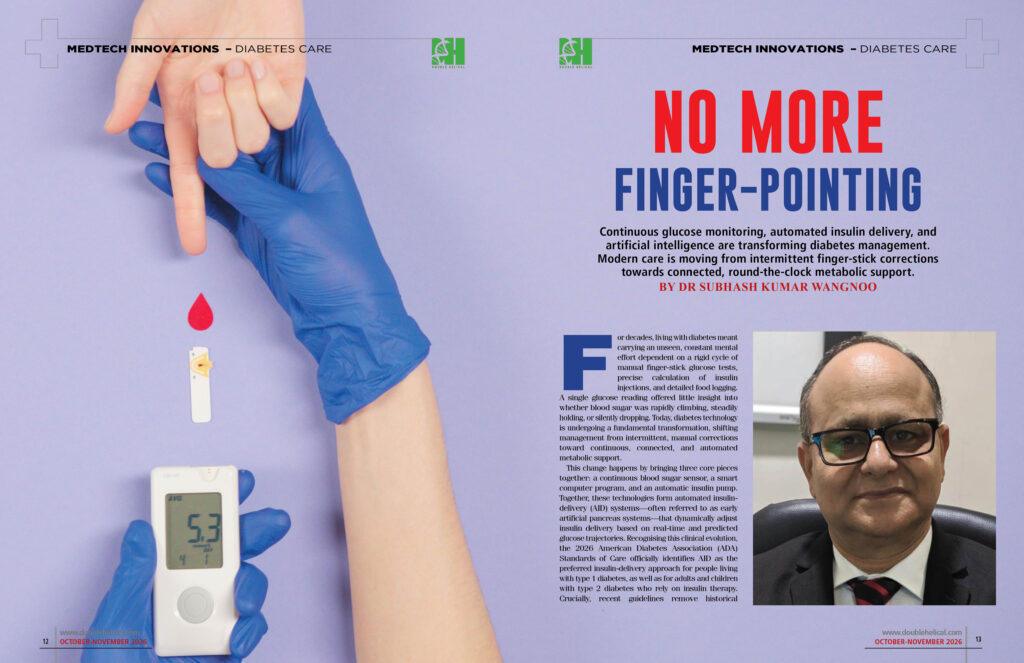
No More Finger-Pointing

Continuous glucose monitoring, automated insulin delivery, and artificial intelligence are transforming diabetes management. Modern care is moving from intermittent finger-stick corrections towards connected, round-the-clock metabolic support.
By Dr Subhash kumar Wangnoo
For decades, living with diabetes meant carrying an unseen, constant mental effort dependent on a rigid cycle of manual finger-stick glucose tests, precise calculation of insulin injections, and detailed food logging. A single glucose reading offered little insight into whether blood sugar was rapidly climbing, steadily holding, or silently dropping. Today, diabetes technology is undergoing a fundamental transformation, shifting management from intermittent, manual corrections toward continuous, connected, and automated metabolic support.
This change happens by bringing three core pieces together: a continuous blood sugar sensor, a smart computer program, and an automatic insulin pump. Together, these technologies form automated insulin-delivery (AID) systems—often referred to as early artificial pancreas systems—that dynamically adjust insulin delivery based on real-time and predicted glucose trajectories. Recognising this clinical evolution, the 2026 American Diabetes Association (ADA) Standards of Care officially identifies AID as the preferred insulin-delivery approach for people living with type 1 diabetes, as well as for adults and children with type 2 diabetes who rely on insulin therapy. Crucially, recent guidelines remove historical prerequisites, such as requiring specific C-peptide levels, verified antibody status, or a mandatory minimum duration of insulin therapy, before allowing individuals to access pump or AID technology.
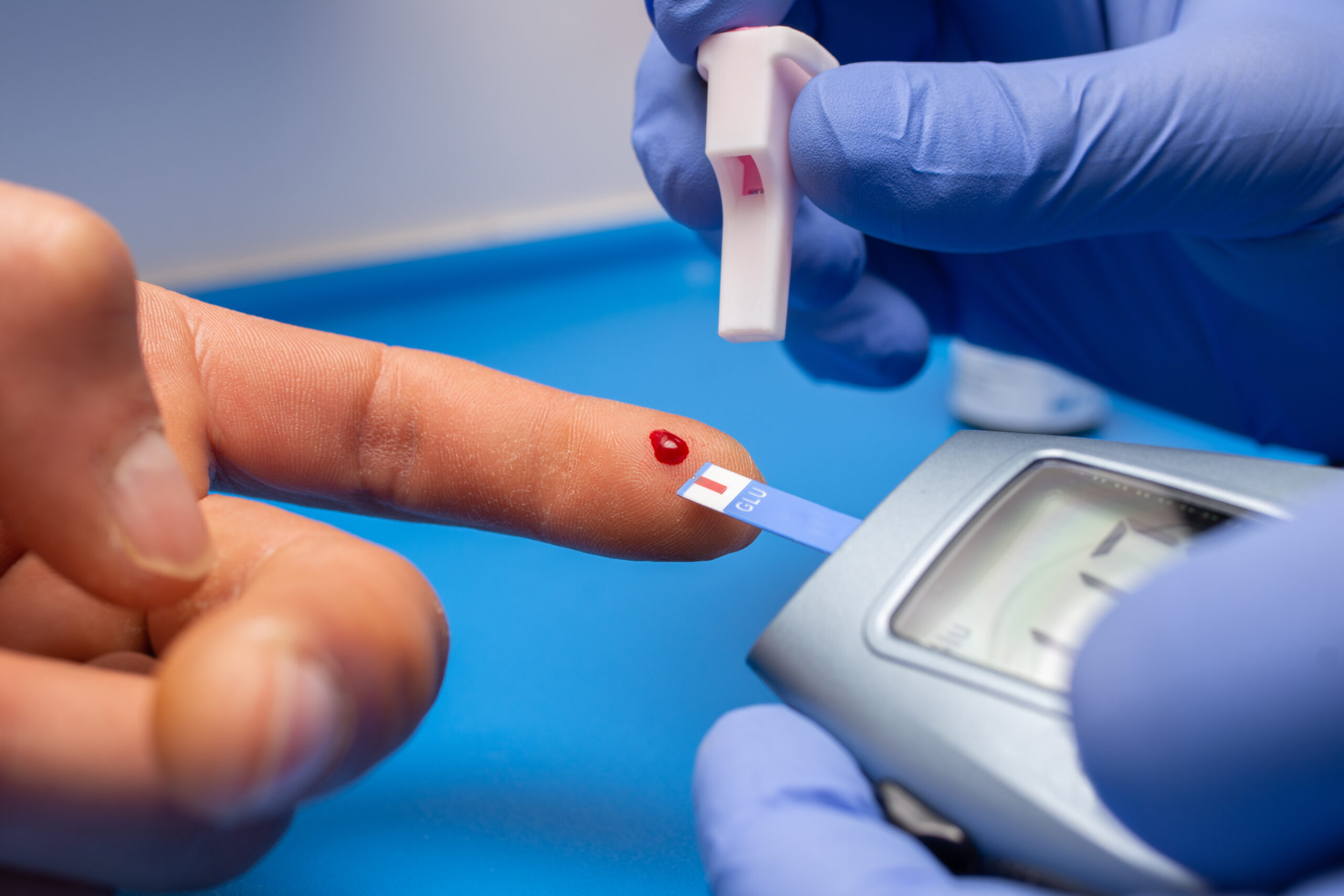
Current AID systems are highly advanced, but they still cannot perfectly mimic how a healthy human body works. Healthy pancreatic beta and alpha cells work in unison, releasing insulin to clear excess glucose and counter-regulatory hormones like glucagon to prevent dangerous drops. Current AID systems deliver only insulin; while they can reduce or suspend insulin delivery when glucose plummets, they cannot actively raise blood sugar. Because meals, physical activity, emotional stress, acute illness, and fluctuating insulin sensitivity can alter blood glucose far faster than subcutaneously injected insulin can act, the next frontier of diabetes care is moving beyond insulin-only delivery toward bihormonal, multihormonal, and multianalyte systems. The ultimate goal is not just to build a better insulin pump, but to create a system that truly understands the body’s needs and takes away the daily stress, planning, and worry of living with diabetes.
Continuous Glucose Monitoring: Illuminating the Complete Picture
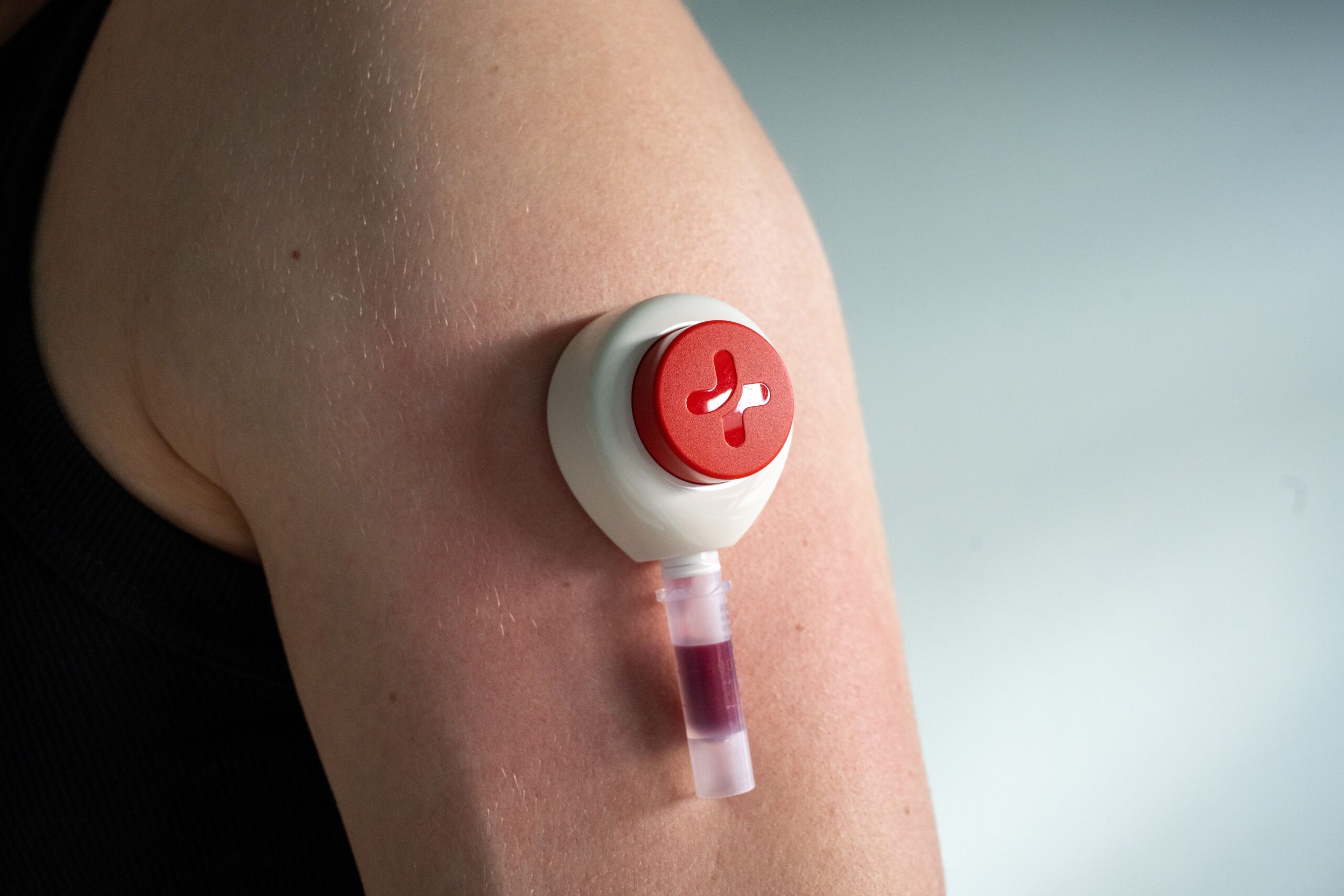
Continuous Glucose Monitors (CGMs) are the foundation of modern diabetes care because they track blood sugar constantly instead of using painful finger-pricks. Instead of a single snapshot in time, a CGM acts like a live video stream of blood sugar. It uses a tiny sensor under the skin to send real-time numbers, trend arrows, and alerts directly to a smartphone.
CGMs provide constant updates on whether blood sugar is rising, falling, or staying steady. Modern sensors last 10 to 14 days and connect automatically to smart insulin pumps. They sound early warnings for dangerous highs or lows, protecting patients during vulnerable periods such as deep sleep, exercise, or illness.
CGM technology has moved diabetes evaluation past the traditional Haemoglobin A1C test, which shows only a three-month average and hides daily fluctuations. Two individuals can have the exact same A1C score, yet one may have stable blood sugar while the other experiences severe swings. CGMs expose these hidden patterns using six standardised measurements:
 CGMs are no longer restricted to type 1 diabetes. Clinicians prescribe them based on personal risk profiles and therapeutic goals. They are highly recommended for individuals with type 2 diabetes who use insulin, older adults at risk for sudden glucose drops, and pregnant individuals requiring strict glycaemic control.
Despite their clinical benefits, CGMs present practical limitations. Sensor readings can lag behind actual blood glucose when levels change rapidly. Physical issues include early detachment, skin irritation, and compression lows caused by sleeping on the sensor. Constant alerts and connection glitches can also lead to alarm fatigue. Ultimately, technology cannot replace human judgment, and patients must verify unusual readings before making treatment decisions.
Automated Insulin Delivery: Alleviating Decision Fatigue
Automated Insulin Delivery (AID) systems take the math and guesswork out of diabetes management by connecting a pump directly to a live sensor. Standard insulin pumps offer flexibility over daily injections for individuals with irregular schedules or morning glucose spikes. AID systems, or hybrid closed-loop systems, link the sensor, the pump, and a control algorithm to automatically adjust or pause insulin delivery based on predicted glucose trajectories.
These systems replace multiple daily injections with a wearable patch or tubing changed every few days. They automatically manage early morning spikes (the dawn phenomenon) and unpredictable daily schedules, reducing the need to calculate doses manually.
CGM live sensor – algorithm control program –automated pump adjustment
Current systems are termed ‘hybrid’ because they still require manual input at mealtimes. Because food raises blood sugar faster than subcutaneously delivered insulin can act, users must estimate carbohydrate intake and enter meal sizes manually. Without this manual input, blood glucose will spike before the control algorithm can compensate.
Despite this limitation, hybrid systems keep blood sugar in target ranges, lower A1C levels, and prevent severe drops across all age groups. The 2026 ADA guidelines officially recommend automated systems as a first-choice standard of care for patients relying on insulin therapy.
 Living with diabetes requires dozens of daily mathematical calculations regarding food ratios, active insulin, physical activity, and overnight levels. By taking over routine adjustments, AID systems lift a significant mental burden. Parents gain relief regarding overnight hypoglycaemia, and adults manage unpredictable work schedules with greater flexibility.
Automated systems still require active management. Users must handle hardware issues such as pump blockages, detached pods, and technical glitches. They must understand emergency care, sick-day rules, ketone monitoring, and manual carbohydrate counting. Because pumps deliver fast-acting insulin, a blocked tube or disconnected patch stops all insulin delivery immediately. This can lead to rapid blood sugar spikes and Diabetic Ketoacidosis (DKA). Proper training, backup supplies, and an emergency plan remain essential safety requirements.
 Smart Pens and Connected Ecosystems: Empowering Injection Therapy
Smart insulin pens offer a connected alternative for individuals who prefer or require multiple daily injections over wearing a pump. Many patients choose injections due to personal preference, equipment costs, lifestyle factors, or physical discomfort from wearable devices. Smart pens and connected pen caps log the exact time and size of every insulin dose, transmitting the data wirelessly to a smartphone application.
Smart pens prevent missed or duplicated doses by maintaining a clear digital record. The system calculates active insulin to prevent dose stacking, while built-in calculators assist with mealtime and correction doses. When paired with CGMs, smart pens provide medical teams with a complete clinical picture:
Explaining Glucose Spikes: Clinicians can verify whether high glucose stems from missed doses, incorrect carbohydrate calculations, stress, or insulin resistance.
Spotting Glycaemic Trends: Care teams can identify recurring patterns, such as post-breakfast spikes or nocturnal drops.
Tracking Lifestyle Changes: Reports illustrate how glucose levels respond to weekend routines, travel, or irregular work shifts.
The Biological Puzzle: Physiological Limits of Single-Hormone Systems
A healthy pancreas balances blood glucose through two distinct cell responses. After mealtimes, beta cells release insulin to promote glucose uptake while co-secreting amylin, which slows digestion and suppresses liver glucose release. When blood sugar falls, alpha cells release glucagon, signalling the liver to convert stored glycogen into glucose.
Current automated systems utilise a single tool: increasing or decreasing insulin delivery. When blood sugar rises, the system increases insulin; when it drops, the system pauses delivery. However, pausing insulin is a passive response that stops further glucose decline but cannot actively raise blood sugar levels.
Single-hormone delivery faces physiological speed limits. Ingested carbohydrates enter the bloodstream in minutes, whereas subcutaneously injected insulin takes longer to peak. Sudden physical activity can cause rapid glucose drops even if insulin delivery has been suspended. When stress or acute illness causes glycaemic volatility, single-hormone systems lack the active tools required for rapid corrections.
Bihormonal Artificial Pancreas Systems: Active Counter-Regulation
To address the limitations of single-hormone delivery, researchers have developed dual-hormone systems that utilise both insulin to lower blood sugar and glucagon to actively raise it. This bihormonal approach provides an automated safety net during unplanned exercise, sleep, or accidental insulin over-dosing, reducing the fear of sudden hypoglycaemia.
Clinical trials show that dual-hormone systems achieve comparable Time in Range to advanced single-hormone pumps, with both automated approaches performing significantly better than manual therapy. However, dual-hormone systems face practical hurdles. Standard liquid glucagon degrades quickly in solution, creating risk for pump tubing blockages. Dual-chamber hardware is bulkier, and operating two infusion sites increases daily effort and supply costs. Long-term effects of chronic micro-doses of glucagon on liver physiology also require ongoing study. Automated glucagon acts as an additional safety layer, and systems must be capable of reverting to single-hormone delivery if glucagon supplies deplete or sensors fail.
Amylin and Pramlintide: Restoring Mealtime Balance
Integrating amylin (via its synthetic analog, pramlintide) into automated systems creates a tri-hormonal approach that mimics post-meal pancreatic physiology. Individuals with type 1 diabetes lack endogenous amylin. Replacing amylin slows gastric emptying and suppresses postprandial glucagon secretion, preventing rapid glucose spikes without requiring large insulin boluses.
Clinical studies indicate that combining insulin with pramlintide in automated systems improved Time in Range from 74 per cent to 84 per cent compared to insulin-only delivery, allowing users to announce meals without precise carbohydrate counting. Potential trade-offs include gastrointestinal side effects such as nausea and increased device complexity.
Multihormonal and Multianalyte Systems: Holistic Metabolic Tracking
The long-term vision for diabetes technology is an automated artificial pancreas that monitors multiple physiological signals and manages delivery across three hormones. Beyond glucose, future systems aim to track continuous ketones, heart rate, physical motion, and sleep metrics:
Exercise Adaptations: If glucose falls while sensors register an elevated heart rate and physical motion, the system can suspend insulin and deliver a micro-dose of glucagon.
Postprandial Response: When mealtime glucose spikes occur, the system can administer insulin while co-delivering amylin to slow digestive absorption.
Continuous Ketone Monitoring (CKM) represents a vital safety advancement. Standard ketone testing relies on finger-stick blood samples or urine test strips used after symptoms appear. A wearable, continuous ketone sensor detects rising ketone levels early, warning of infusion set blockages or insulin interruption hours before the onset of Diabetic Ketoacidosis (DKA).
Multianalyte engineering faces technical challenges. Processing multiple sensor inputs can lead to algorithmic noise, signal lag, and false alarms. Control algorithms must accurately differentiate between physical exercise and acute physiological stress. Regulatory approval, cybersecurity protection, and manufacturing scalability remain necessary prerequisites for widespread commercial availability.
Artificial Intelligence: Reducing Manual Burden and Understanding Context
Advanced Artificial Intelligence (AI) and Machine Learning (ML) aim to eliminate manual meal logging and exercise entries by interpreting physiological context automatically. By analysing real-time glucose, heart rate, and movement data, AI algorithms infer patient activities:
Unannounced Meals: If blood glucose rises rapidly while physical activity sensors remain stationary, the algorithm identifies meal intake and adjusts insulin delivery.
Physical Exercise: If glucose drops while heart rate and physical acceleration increase, the algorithm recognises exercise and reduces insulin delivery to prevent hypoglycaemia.
 AI algorithms adapt to an individual’s changing metabolic patterns over time, adjusting parameters for growth spurts, pregnancy, illness, or shifting work schedules. Safety parameters are essential for automated medication control. Control algorithms require built-in cutoffs to prevent erroneous dosing caused by sensor glitches or corrupted data. AI models trained on general populations must adapt safely to individuals with unique conditions, such as renal impairment or severe insulin resistance. AI serves as a decision-support tool designed to assist, rather than replace, clinical management.
Remote monitoring tools and AI analytics can expand access to specialised care across diverse geographic regions, from urban centres like Delhi to rural communities across India. Achieving this impact requires affordable hardware, stable connectivity, and clinical training for local healthcare providers.
Wearable Integration and Connected Care
Diabetes hardware is transitioning toward smaller, integrated wearable patches that combine monitoring, delivery, and control algorithms. Engineers are evaluating single-patch devices that handle sensing and insulin delivery simultaneously, alongside dual-analyte sensors tracking glucose and ketones on one platform.
Combined wearable devices present a single point of failure risk. If an all-in-one patch detaches, clogs, or fails mechanically, the user loses glucose monitoring and insulin delivery at the same time. Maintaining a verified manual backup plan remains a core safety requirement.
Cloud-based data platforms enable medical teams to review device data remotely. Rural patients living far from tertiary care centres can receive remote regimen adjustments, while urban users manage busy schedules while remaining connected to their clinicians. Because connected devices continuously log sensitive data—including glucose levels, insulin doses, exercise, and sleep metrics—robust end-to-end encryption and transparent patient data controls are mandatory.
Takeaways
Translating AI-driven and multihormonal technology into routine clinical practice requires addressing core engineering and operational challenges. Preventing liquid glucagon degradation and tubing precipitation over extended wear periods is essential for hormonal stability. Designing dual-chamber and multianalyte hardware that remains compact and comfortable for daily wear will drive device miniaturisation. Control software must maintain safe delivery during sensor dropouts, compression lows, or data noise to achieve algorithmic reliability.
Securing insurance coverage and reducing out-of-pocket costs for wearable devices and monthly consumables will improve economic accessibility. Minimising alarm fatigue, skin irritation from medical adhesives, and daily interaction burden will enhance the user experience. Maintaining secure wireless connectivity, robust app integration, and cloud data protection supports seamless system integration. Finally, training patients and healthcare providers to interpret complex multianalyte data streams and continuous metric reports remains crucial for clinical education.
(The author is Senior Consultant Endocrinologist and Diabetologist, Apollo Centre for Obesity, Diabetes and Endocrinology [ACODE], Indraprastha Apollo Hospital, New Delhi.)