
United by Unique
The theme of World Cancer Day 2026 reminds us that while cancer is a global threat, each country, each community, and each person affected faces distinct realities, and effective responses must therefore be shaped collectively while implemented locally.
By Dr Catharina Boehme
Cancer remains one of the leading causes of death globally and continues to cause immense
suffering for individuals and families. In the WHO South-East Asia Region, the year 2022 alone recorded an estimated 2.24 million new cancer cases according to updated GLOBOCAN data, and 1. 5 million deaths, including over 60,000 cases among children. These figures represent a 15 percent increase from previous estimates, underscoring the accelerating crisis. Despite advances in science and care, the burden continues to rise, and the number of new cases and deaths is projected to almost double by 2050 if current trends persist.This year, the theme of World Cancer Day —” United by Unique “— reminds us that while cancer is a global threat, each country, each community, and each person affected by cancer faces distinct realities. Effective responses must therefore be shaped collectively and implemented locally.
In the WHO South-East Asia Region, the year 2022 alone recorded an estimated 2.24 million new cancer cases and 1.5 million deaths, including over 60,000 cases among children. These figures represent a 15 percent increase from previous estimates, underscoring the accelerating crisis.
A Regional Strategy for Action
Guided by the WHO South-East Asia Regional Strategy for Comprehensive Cancer Prevention and Management 2024–2030, WHO is supporting countries to develop national cancer control plans, strengthen cancer registries, improve the quality of early diagnosis and treatment, and expand access to palliative care. The strategy provides a roadmap for member states to address the full continuum of cancer care—from prevention and early detection to treatment, survivorship, and end-of-life care.
Collaboration remains key. In partnership with the International Atomic Energy Agency (IAEA) and the International Agency for Research on Cancer (IARC), WHO is supporting Member States with baseline situation analysis and recommendations to guide cancer control planning and investments. Further, platforms such as the South-East Asia Regional Childhood Cancer Network (SEAR-CCN) and the South-East Asia Cancer Grid (SEA Can Grid) are strengthening institutional collaboration across countries. SEA Can Grid also supports the adaptation of evidence to the local contexts of countries in the Region. These networks facilitate the sharing of best practices, telemedicine consultations, and joint research initiatives that would be impossible for individual countries to undertake alone.
The usual symptoms of hypertension are headache (sometimes throbbing in nature), flushing, giddiness, bleeding from nose, vision disturbances, poor school performance, irritability, blood or protein in urine, passing urine more or less frequently and weight loss. In some cases hypertension can be without symptoms and therefore those children who are obese, have history of neonatal intensive care stay, or have kidney/ heart disease or cardiac disease should have their blood pressure checked. Mercury instruments are the best for checking blood pressure, but as they are being phased out, aneroid devices are being used more commonly and they are fairly accurate, but they require frequent calibration.Automatic BP machines are also being used.If an automatic (digital) blood pressure machine is being used and blood pressure readings come high, then they need to be confirmed with mercury or aneroid device.
Innovation and Leadership Across the Region
Across the Region, countries are demonstrating innovation and leadership. Thailand’s Cancer Anywhere initiative enables
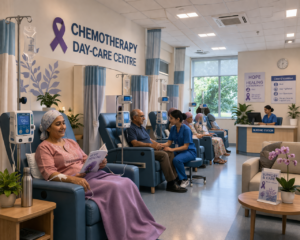
people with cancer to access treatment at any public hospital nationwide, eliminating geographical barriers to care. India is expanding its network of day-care chemotherapy centres in district hospitals, bringing treatment closer to patients in rural areas, while Bhutan’s population-based cancer registry provides data from the entire country to inform targeted prevention programmes and strengthen care outcomes and survival. Bhutan’s registry is particularly notable as one of the few nationwide, population-based cancer registries in the Region, capturing data from even the most remote Himalayan communities. Under the Global Initiative for Childhood Cancer, Myanmar has improved access to treatment through a satellite centre network that connects peripheral hospitals with specialised urban centres, Nepal has introduced free childhood cancer treatment for families below the poverty line, and Sri Lanka has developed a standalone national policy for childhood cancer —the first of its kind in the Region.
The Persistent Gaps
Yet major challenges remain. The South-East Asia Region’s overall mortality-to-incidence ratio is nearly double that of high-income countries —67 percent compared to 35 percent— and is three times higher for childhood cancer. This means a child diagnosed with cancer in South-East Asia is three times more likely to die than a child in a high-income country.
The South-East Asia Region’s overall mortality-to-incidence ratio is nearly double that of high-income countries—67 percent compared to 35 percent—and is three times higher for childhood cancer. This means a child diagnosed with cancer in South-East Asia is three times more likely to die than a child in a high-income country.
Not all countries have developed national cancer control plans, screening coverage for specific cancers such as breast, cervical, and oral cancers is below recommended levels, and access to diagnosis and management services remains uneven, both across and within countries. Rural populations, in particular, face significant barriers to accessing timely diagnosis and treatment, often traveling hundreds of kilometres for basic cancer care.
Accelerating Action: A Call to Governments
- Achieving substantial and persistent progress will require continued political commitment and long-term investment. To accelerate action, governments, partners, and civil society are urged to:
- Increase predictable and sustainable investment in cancer control, with a target of allocating at least 5 percent of national health budgets to cancer services.
- Strengthen early diagnosis and ensure affordable treatment for priority cancers such as childhood, breast, cervical, and oral cancers, including through expanded screening programmes and public awareness campaigns.
- Expand partnerships and further leverage platforms such as SEACanGrid to build capacity and improve quality of care across the Region.
- Promote equitable access to essential cancer services, including radiotherapy, chemotherapy, and palliative care, with a focus on reaching marginalised and underserved populations.
- Implement tobacco control measures and HPV vaccination programmes to prevent cancers at their source.
On World Cancer Day, we reaffirm our commitment to a people-centred approach, placing individuals, families, and communities at the heart of our efforts. This means listening to patients and their families, understanding their unique needs and challenges, and designing health systems that respond with compassion and competence.
A People-Centred Vision
On World Cancer Day, we reaffirm our commitment to a people-centred approach, placing individuals, families, and communities at the heart of our efforts. This means listening to patients and their families, understanding their unique needs and challenges, and designing health systems that respond with compassion and competence. United by Unique, we can change the course of cancer in the Region and build a healthier and more equitable future, free from avoidable suffering.
Across the Region, countries are demonstrating innovation and leadership. Thailand’s Cancer Anywhere initiative enables people with cancer to access treatment at any public hospital nationwide, while India is expanding its network of day-care chemotherapy centres in district hospitals, bringing treatment closer to patients in rural areas.

What Is World Cancer Day?
World Cancer Day took place on February 4. It is observed annually on this date to raise global awareness, improve education, and catalyse personal, collective, and government action against the disease. Origins: The day was officially established in 2000 at the World Summit Against Cancer for the New Millennium in Paris, where global leaders united to declare cancer a priority public health issue.
Key Highlights from 2026:
- Theme: This year marks the second year of the 2025–2027 campaign theme, “United by Unique.”
- It focuses on a people-centred approach to care, emphasising that while every cancer journey is personal, the world is united in its goal to reduce the global cancer burden.
- Global Impact: Worldwide, an estimated 20 million new cancer cases and 9.7 million deaths occurred in2022, with numbers projected to reach 35 million new cases by 2050.
- Regional Focus: The 2026 observance in South-East Asia highlights the urgent need for equitable access to cancer care, with special attention to childhood cancers and the integration of palliative care into primary health systems.
(The author is Officer-in Charge,WHO South-East Asia Region)