
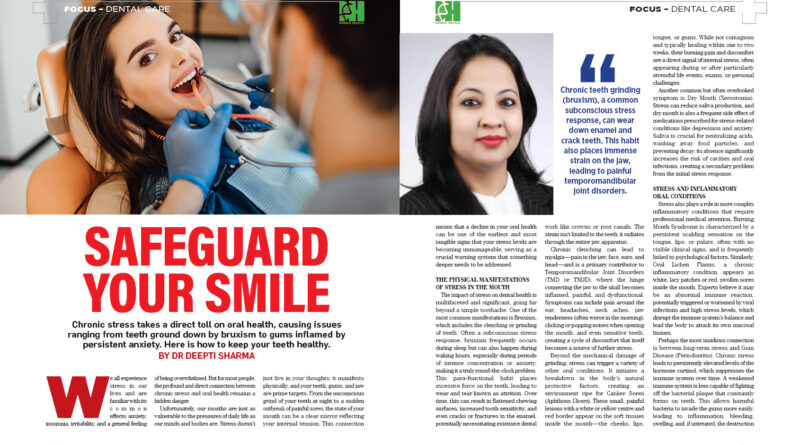
Safeguard Your Smile
 Chronic stress takes a direct toll on oral health, causing issues ranging from teeth ground down by bruxism to gums inflamed by persistent anxiety. Here is how to keep your teeth healthy.
By Dr Deepti Sharma
We all experience stress in our lives and are familiar with its common effects: anxiety, insomnia, irritability, and a general feeling of being overwhelmed. But for most people, the profound and direct connection between chronic stress and oral health remains a hidden danger.
Unfortunately, our mouths are just as vulnerable to the pressures of daily life as our minds and bodies are. Stress doesn’t just live in your thoughts; it manifests physically, and your teeth, gums, and jaw are prime targets. From the unconscious grind of your teeth at night to a sudden outbreak of painful sores, the state of your mouth can be a clear mirror reflecting your internal tension. This connection means that a decline in your oral health can be one of the earliest and most tangible signs that your stress levels are becoming unmanageable, serving as a crucial warning system that something deeper needs to be addressed.

The Physical Manifestations of Stress in the Mouth
The impact of stress on dental health is multifaceted and significant, going far beyond a simple toothache. One of the most common manifestations is Bruxism, which includes the clenching or grinding of teeth. Often a subconscious stress response, bruxism frequently occurs during sleep but can also happen during waking hours, especially during periods of intense concentration or anxiety, making it a truly round-the-clock problem. This para-functional habit places excessive force on the teeth, leading to wear and tear known as attrition. Over time, this can result in flattened chewing surfaces, increased tooth sensitivity, and even cracks or fractures in the enamel, potentially necessitating extensive dental work like crowns or root canals. The strain isn’t limited to the teeth; it radiates through the entire jaw apparatus.
Chronic clenching can lead to myalgia—pain in the jaw, face, ears, and head—and is a primary contributor to Temporomandibular Joint Disorders (TMD or TMJD), where the hinge connecting the jaw to the skull becomes inflamed, painful, and dysfunctional. Symptoms can include pain around the ear, headaches, neck aches, jaw tenderness (often worse in the morning), clicking or popping noises when opening the mouth, and even sensitive teeth, creating a cycle of discomfort that itself becomes a source of further stress.
Beyond the mechanical damage of grinding, stress can trigger a variety of other oral conditions. It initiates a breakdown in the body’s natural protective factors, creating an environment ripe for Canker Sores (Aphthous Ulcers). These small, painful lesions with a white or yellow centre and red border appear on the soft tissues inside the mouth—the cheeks, lips, tongue, or gums. While not contagious and typically healing within one to two weeks, their burning pain and discomfort are a direct signal of internal stress, often appearing during or after particularly stressful life events, exams, or personal challenges.

Another common but often overlooked symptom is Dry Mouth (Xerostomia). Stress can reduce saliva production, and dry mouth is also a frequent side effect of medications prescribed for stress-related conditions like depression and anxiety. Saliva is crucial for neutralizing acids, washing away food particles, and preventing decay; its absence significantly increases the risk of cavities and oral infections, creating a secondary problem from the initial stress response.
Stress and Inflammatory Oral Conditions
Stress also plays a role in more complex inflammatory conditions that require professional medical attention. Burning Mouth Syndrome is characterized by a persistent scalding sensation on the tongue, lips, or palate, often with no visible clinical signs, and is frequently linked to psychological factors. Similarly, Oral Lichen Planus, a chronic inflammatory condition, appears as white, lacy patches or red, swollen sores inside the mouth. Experts believe it may be an abnormal immune reaction, potentially triggered or worsened by viral infections and high stress levels, which disrupt the immune system’s balance and lead the body to attack its own mucosal tissues.
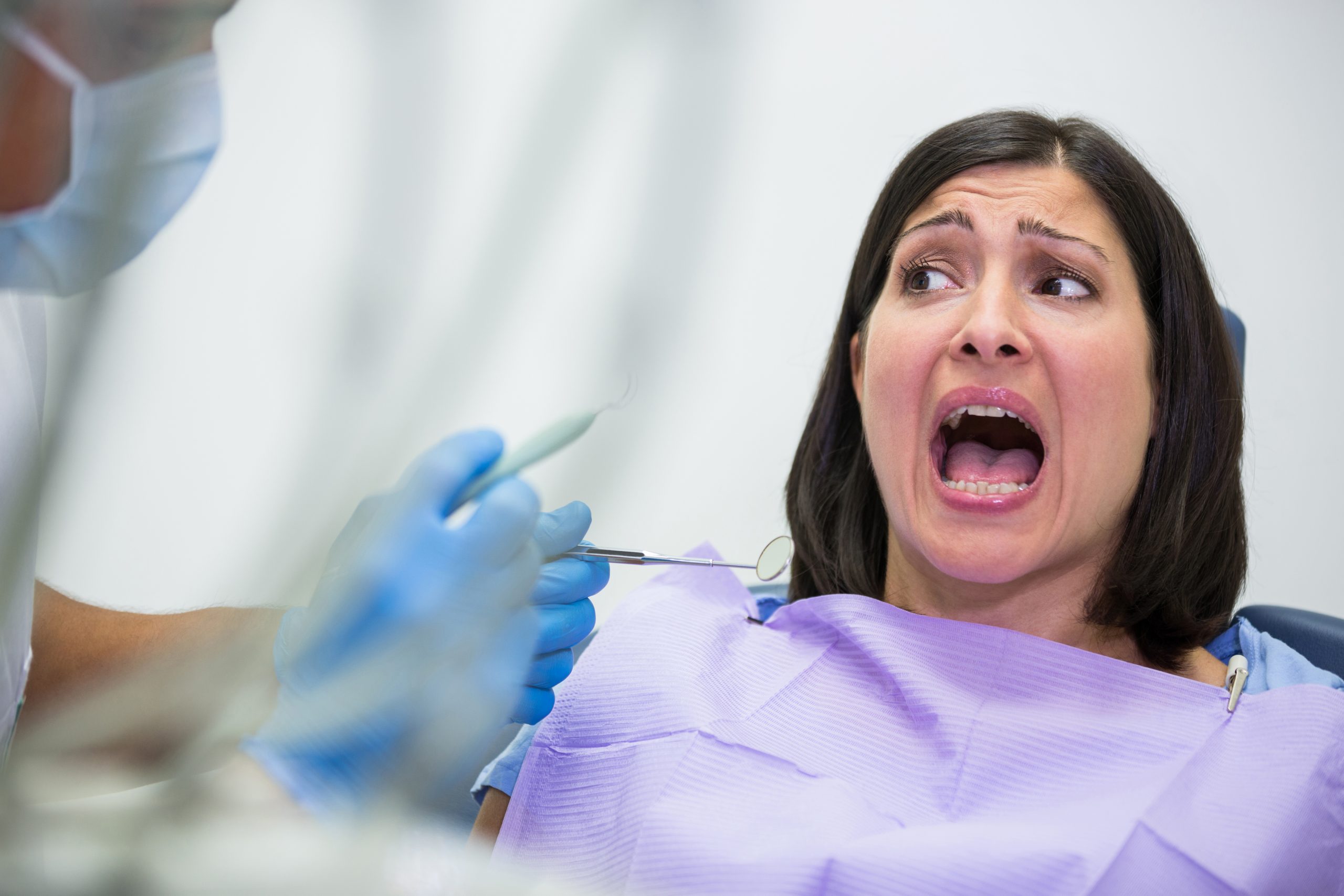
Perhaps the most insidious connection is between long-term stress and Gum Disease (Periodontitis). Chronic stress leads to persistently elevated levels of the hormone cortisol, which suppresses the immune system over time. A weakened immune system is less capable of fighting off the bacterial plaque that constantly forms on teeth. This allows harmful bacteria to invade the gums more easily, leading to inflammation, bleeding, swelling, and, if untreated, the destruction of the bone supporting the teeth, ultimately resulting in tooth loss. Furthermore, stress often leads to neglect of oral hygiene routines and promotes detrimental coping behaviours like smoking, increased alcohol consumption, and a diet high in sugary, starchy comfort foods. These habits create a perfect storm for accelerated Tooth Decay (Cavities), compounding the direct physiological damage caused by stress hormones and creating a vicious cycle where poor oral health adds to one’s overall stress burden.

What you Need to Do
Protecting your oral health from stress requires a conscious, two-pronged approach: managing the source of the stress and mitigating its physical effects on your mouth. First and foremost, do not neglect your oral hygiene, especially during stressful periods. Brushing twice daily with fluoride toothpaste and flossing are non-negotiable. Be mindful of using tobacco or alcohol as stress relievers, as they are highly addictive and exacerbate oral problems, leading to stained teeth, gum recession, and oral cancer risk.
If you suspect you are grinding your teeth, consult your dentist about a custom night guard to protect your teeth and jaws during sleep; this simple device can prevent thousands of pounds of destructive force from damaging your smile. Instead, focus on proven stress-reduction techniques that benefit your whole body and actively counteract the physical mechanisms of stress. Here are effective strategies for stress reduction:
Regular Exercise: This is a powerful tool. It promotes the production of mood-elevating neurohormones like norepinephrine and forces the body’s communication systems—cardiovascular, muscular, and nervous—to work in harmony, making you more resilient to stress. The cardiovascular system communicates with the renal system, which communicates with the muscular system, creating a workout for the body’s entire stress-response apparatus that makes it more efficient.
Mindfulness and Meditation: Incorporating mindfulness practices is equally vital. Meditation helps clear mental clutter, provides a new perspective on stressful situations, and fosters a sense of calm that carries through the day. Simply being present in the moment, rather than ruminating on the past or future, can reduce anxiety and open you up to more positive emotions. Positive affirmations can also help reprogram negative thought patterns, acting in the same way negative self-talk does but for your benefit, by feeding the body nourishing mental energy.
Nutritional Support: Your diet plays a critical role. Opt for a more plant-based, alkaline diet rich in fruits, vegetables, and whole grains. Reduce intake of inflammatory foods like heavy meats, refined sugars, trans fats, and processed items, which create an acidic, inflammatory state in the body that heightens stress. Specific nutritional support can help; magnesium is a key mineral responsible for more over 700 enzyme systems that regulate energy, muscle relaxation, nerve function, and sleep. Supplementing with a bioavailable form of magnesium can be a foundational step in building stress resilience, but it must be in the right form and taken in sufficient quantity to be effective.
Cultivate Joy and Connection: Finally, make time for fun and silliness to let your “inner child” play, which boosts vitality and is one of the best stress-relief solutions. Practicing gratitude and engaging in volunteer work can increase self-confidence, provide a sense of purpose, and combat feelings of depression and anxiety, promoting overall feelings of well-being that buffer against daily stressors.

By addressing stress holistically—through vigilant physical care, dedicated mental management, and thoughtful nutritional support—you can protect not just your smile, but your overall well-being, breaking the cycle where stress undermines health, and poor health, in turn, creates more stress.
(The author is the owner of Dr Sharma’s Dental Care, CMPDI Road, Shobhalok Building, and Chairperson of the SSD Seva Mission and SNA Social Welfare Foundation Medical Branch, Nagpur.)