
Double Helical Roundtable Calls for Regulatory Reforms to Advance UHC
Trehan Group, a prominent real estate developer, in association with Association of Healthcare Providers India (AHPI) recently organised Double Helical’s Round Table Conference on “Regulatory Reforms Regulating Private Sector in Achieving Universal Health Coverage” in Gurgaon
By Team Double Helical
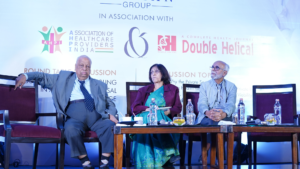
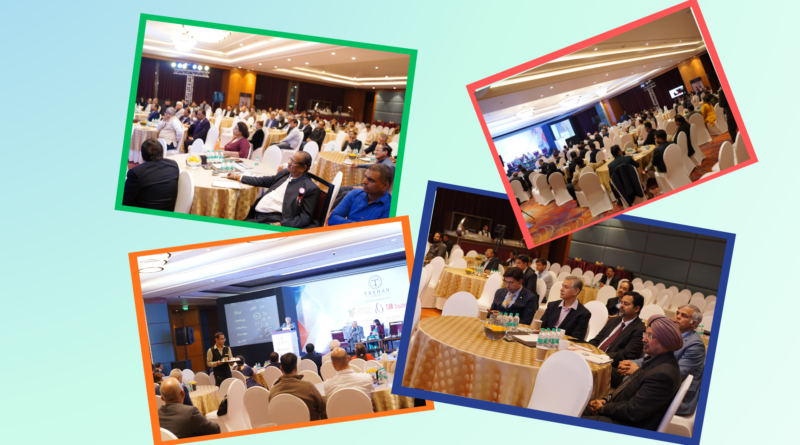
The conference witnessed a galaxy of eminent persons who gathered to celebrate medical excellence, care, compassion, and empathy for patients—values epitomised by deserving doctors, healthcare institutions, and diverse organisations. Participants deliberated on the regulatory reforms needed to strengthen sustainable private sector participation in India’s health system. An impressive gathering comprising the “who’s who” of the healthcare industry, alongside distinguished guests from different walks of life, witnessed the brain storming conclave .The event was organised by Double Helical magazine with the support of the Association of Healthcare Providers (AHPI) India and the Consortium of Accredited Hospitals Organisation (CAHO).
Addressing the Pillars of UHC
The conference emphasised “Improving Availability & Affordability of Healthcare for the Common Man,” where leaders from government, academia, the community, the industry, and international agencies discussed lasting solutions to enable India to reach the goal of providing universal health coverage (UHC). The thought-provoking roundtable discussed how to define UHC in terms of availability, accessibility, – affordability, and acceptability (quality). According to health experts present at the scientific seminar, India has roughly 1.5 beds per 1,000 population, which is significantly lower than the WHO norm of 3.5 beds per 1,000 population. Therefore, the country needs to more than double its number of beds. Accessibility remains a critical issue, as most tertiary care beds are confined to Tier-I cities and some Tier-II towns. This leaves Tier-III and rural areas without adequate tertiary care services, forcing populations to travel long distances to avail themselves of these services. Furthermore, affordability continues to be a major area of concern.

Leadership and Participation
These services. Furthermore, affordability continues to be a major area of concern. The session was chaired by Dr A K Agarwal (Professor of Excellence, Medical Advisor at Apollo Hospital, and former Dean of Maulana Azad Medical College) and Dr Suneela Garg (Advisor to ICMR and Professor of Excellence in Community Medicine at Maulana Azad Medical College). It was moderated by Dr Vijay Agarwal, President of CAHO.
The ceremony was graced by renowned gastroenterologists, hepatologists, translational scientists, researchers, and media professionals, including:
- Dr Giridhar J. Gyani, Director General, AHPI India
- Dr Chandrakant Pandav, Padma Shri Awardee and Former Head of Community Medicine, AIIMS
- Dr Madan Gopal, Advisor and Head, National Health System Resource Centre
- Dr Narin Sehgal, Secretary, AHPI Delhi Chapter
- Cdr Navneet Bali, Executive Director and CEO, Clearmedi Healthcare
- Dr Amit Bhushan Sharma, Director and Unit Head of Cardiology, Paras Hospital
- Dr S P Yadav, CMD, Pushpanjali Hospital
- Dr J C Passy, Dean, World College of Medical Science and Research
- Dr Sanjiv Gulati, Senior Nephrologist, Fortis Hospital
- Dr Sunil Khetrapal, DDG, AHPI
- Amresh Kumar Tiwary, Editor-in-Chief, Double Helical
The Role of the Private Sector
With private providers accounting for 55.3 per cent of hospitalisation cases and 65.8 per cent of treated ailments in India, healthcare leaders emphasised
Private Sector Delivers 55% of Hospitalisations, 65.8% of Treated Ailments; Roundtable Calls for Regulatory Reforms to Advance UHC*
that achieving UHC requires structured policy alignment between public financing and private sector capacity. Data presented during the session showed that private general hospitals represent the single largest provider category, accounting for 27 per cent of current health expenditure (NHA 2021-22). In comparison, government general hospitals account for 18 per cent, while pharmacies constitute 19 per cent. Despite this heavy dependence on private care, out-of-pocket expenditure still accounts for 39.4 per cent of total health expenditure (2021-22), highlighting persistent gaps in financial risk protection. Participants noted that UHC must be approached as a system-wide commitment, rather than a binary “public-versus-private” debate.
Key Recommendations and Future Outlook
Dr Girdhar Gyani stressed that clear regulation, standard quality benchmarks, and timely reimbursement are essential to ensure equitable access while maintaining operational sustainability. Dr. Madan Gopal emphasised the need for strategic purchasing, contracting, and payment reforms to effectively leverage private sector capacity. Concerns were raised regarding financial pressures. Dr. Narin Sehgal called for rationalised and harmonised regulatory frameworks to improve the ease of doing business, while Cdr Navneet Bali cautioned that price controls and reimbursement delays could deter investments in advanced infrastructure.
Harsh Trehan, CMD of Trehan Group, reiterated that predictable regulation and transparent quality standards are crucial for sustained private sector participation in government-backed programs. To conclude the event, the Trehan Group launched a new healthcare- oriented luxury project in Gurgaon, offering special discounts for healthcare professionals. The organizers stated that key recommendations from the roundtable will be compiled into a structured policy submission to the Ministry of Health and Family Welfare to accelerate progress toward equitable and sustainable UHC.