

Freedom from Immobility
 Knee replacement is today one of the most successful operations in medicine, improving the lives of millions. From the early stages of physical therapy to the sophisticated precision of robotic-assisted joint replacement, we must keep pace with technology to ensure that we are offering patients a life free from the constraints of end-stage arthritis.
By Dr Yash Gulati
Knee problems crop up after years of wear and tear of the joints that are pivotal to the body’s movements and sometimes due to injuries or other causes. Our knee joint is made up of basically a joint between the thigh bone/femur bone and the leg bone/tibia bone and the patella and knee cap in front. So, basically, there is an inner part of the knee, the outer part of the knee, and the joint between the patella and the thigh bone. It is covered with very fine cartilage, known as the articular cartilage. The friction of this articular cartilage is less than the friction of the ice slab moving on the ice slab.
With time, for whatever reasons, whether due to age or due to some type of arthritis, say Rheumatoid arthritis or due to injury, if this cartilage gets damaged and the underlying bone gets exposed then this joint becomes very painful. There are several contributing factors; lack of activity and weak muscles that do not support joints is one factor, but the main factor is either aging or wear and tear or some kind of inflammatory arthritis. Since many patients of different generations have similar problems, there is some genetic element in this. Additionally, the lack of activity can cause weight gain, which acts as a further contributory factor.
Conservative Treatment and Indicators for Surgery
Initially, it is treated with painkillers, weight reduction, physiotherapy, and some other medications. One of the most effective means of treatment is physical therapy, and the most effective therapy is called closed-chain quadriceps strengthening. With this therapy, the foot is planted on the floor to strengthen the large thigh muscles. This often improves the way the kneecap moves through the knee joint, decreasing pain and increasing ability to function.
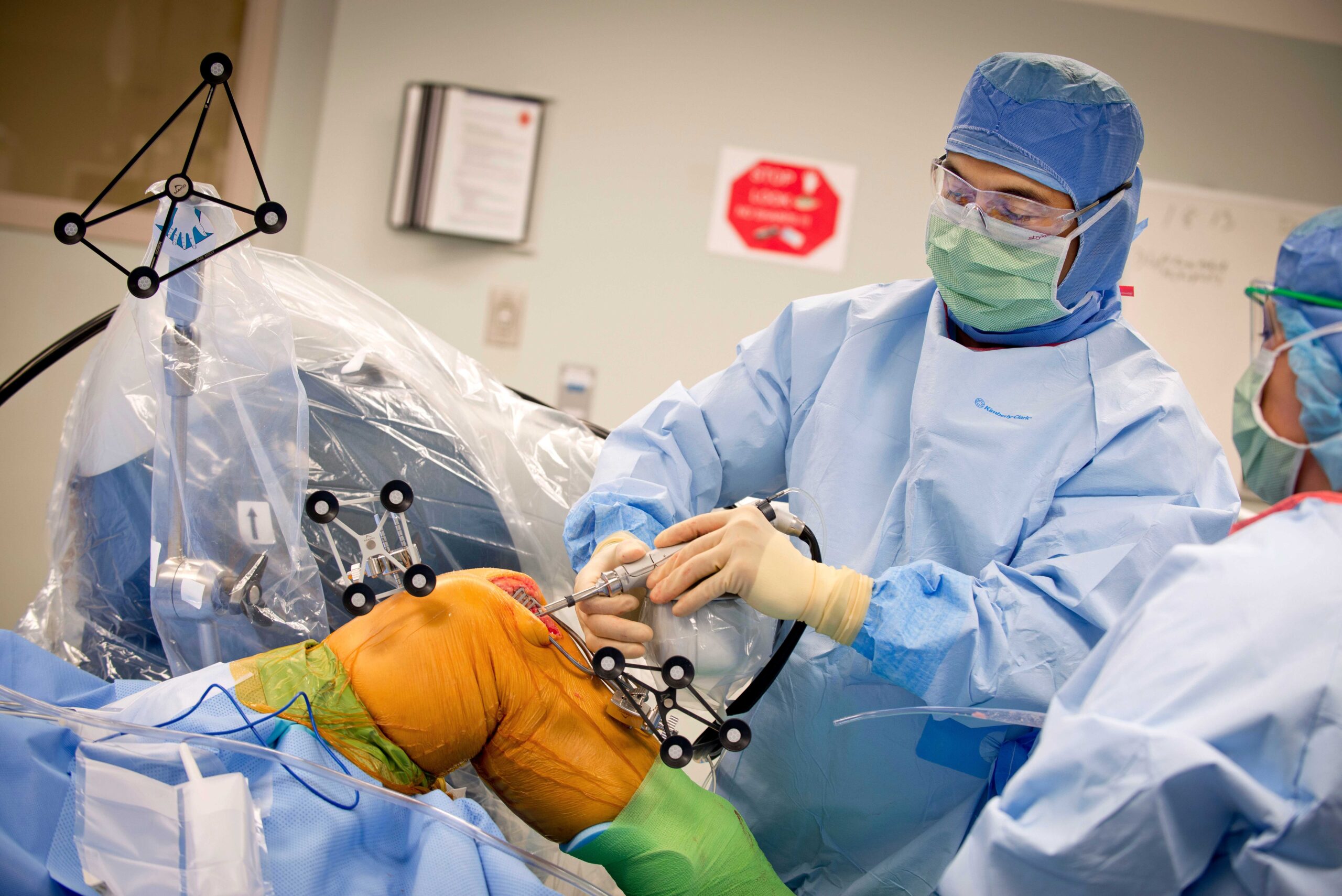 But if these medications do not help and the joint becomes very badly damaged, then that is the stage where joint replacement is required. So, it is basically, to put it in one sentence, it is for end-stage arthritis of knee joint. Usually, we like to wait till the age of 60 to do the joint, but now with all these advances, if a patient has this problem in the earlier years, also we offer replacement because you can’t make a patient live in pain for that long.
Mostly in the age group of 40-50 in those cases, we also have advancement, which is partial knee replacement. We change only one part of the joint, for example, just the inner part of the joint, which is a much smaller surgery with much better results, and the movements of the knee and the walking functions is very close to normal. You can sit on the floor, you can play light sports and all that. Robotic Surgery also is useful in partial knee replacement. This is another aspect of replacement surgery in which we do not change the whole joint but only change part of the joint.
The Precision of Robotic Surgery
Knee replacement is today one of the most successful operations in medicine and has improved the lives of millions of patients. Patients often ask about the correct time to have a knee replacement. It is a sophisticated surgery and the success of this surgery depends on the alignment of the implants that are inserted. So, ideally speaking, the weight bearing of the implants should be such that the weight-bearing line passes like it passes in a normal human being in the knee joint. As arthritis progresses, these lines of weight-bearing change and also it is important to remember that this line of weight-bearing is different for every person.
Some angles in some patients are different than others. Conventionally speaking, there are very sophisticated jigs available which can align these components in a proper position but most of the times these components are aligned with an approximation to certain average angles. For example—a slope of one bone and the angle of one bone can be different in one person compared to other person. But the surgery is done with conventional instruments taking an average so it may not be exactly the same replication as the patient’s original anatomy. Therefore, the line of weight bearing may not be 100 per cent of what the native knee or hip was.
 The longevity of the implant will depend on how close this line of weight bearing is and it has been scientifically proven that if it is outside 3 degrees of the native weight-bearing line, the chances of early loosening of the implants which are fixed to the bone are higher. We can determine the native line of weight bearing by doing longstanding x-rays including hip, knee, and ankle standing, known as a scanogram, or even better by doing a CT scan and then computing these multiple sections to reconstruct what the native joint would have looked like. This is the basis of Robotics Surgery—that we try and align the implants to what a native hip or knee alignment was. The data is taken and fed into the computer and the computer calculates and then suggests to the surgeon that this is how the cuts should be made to put the implants. The computer also suggests the soft tissue balancing—how it should be done by how much is required which is critical for the success. Once this is calculated and printed on the screen, the surgeon can then start to execute this plan.
Benefits and Future Outlook
Now the robot and surgeon can obviously modify it to bring it to the native anatomy and then the robot will let you execute that plan precisely. It will just not let you go outside that plan. So, the chances of making an error are very few and in this, the beauty of the situation is that the amount of bone removed with robotic surgery is much less because robotic surgery lets you tighten the loose sides than trying to open up the tight sides to bring it as close to the loose side. So, this is the fundamental chain because we remove very less bone, the soft tissue handling is much less and because it is much less, the rehabilitation is much faster. Because the implants are implanted in proper position the way they should have been, it is expected that the surgery results will be much better and the implants will last longer than the other conventional surgery.
Conventional surgery has been extremely successful, there is no doubt about it but the question is can we improve on it? Because if an implant was lasting 15 years now, can we make it last 25 years? That is the battle. About 15-20 per cent of patients with conventional surgery used to have unexplained pain. And it is thought that unexplained pain is due to the micro differences in the balance of the knee joint which the robot, by its mathematical calculations, will solve. It is hoped that these people who had unexplained pain will be benefitted immensely and the success rate will go much higher than with the conventional instruments.
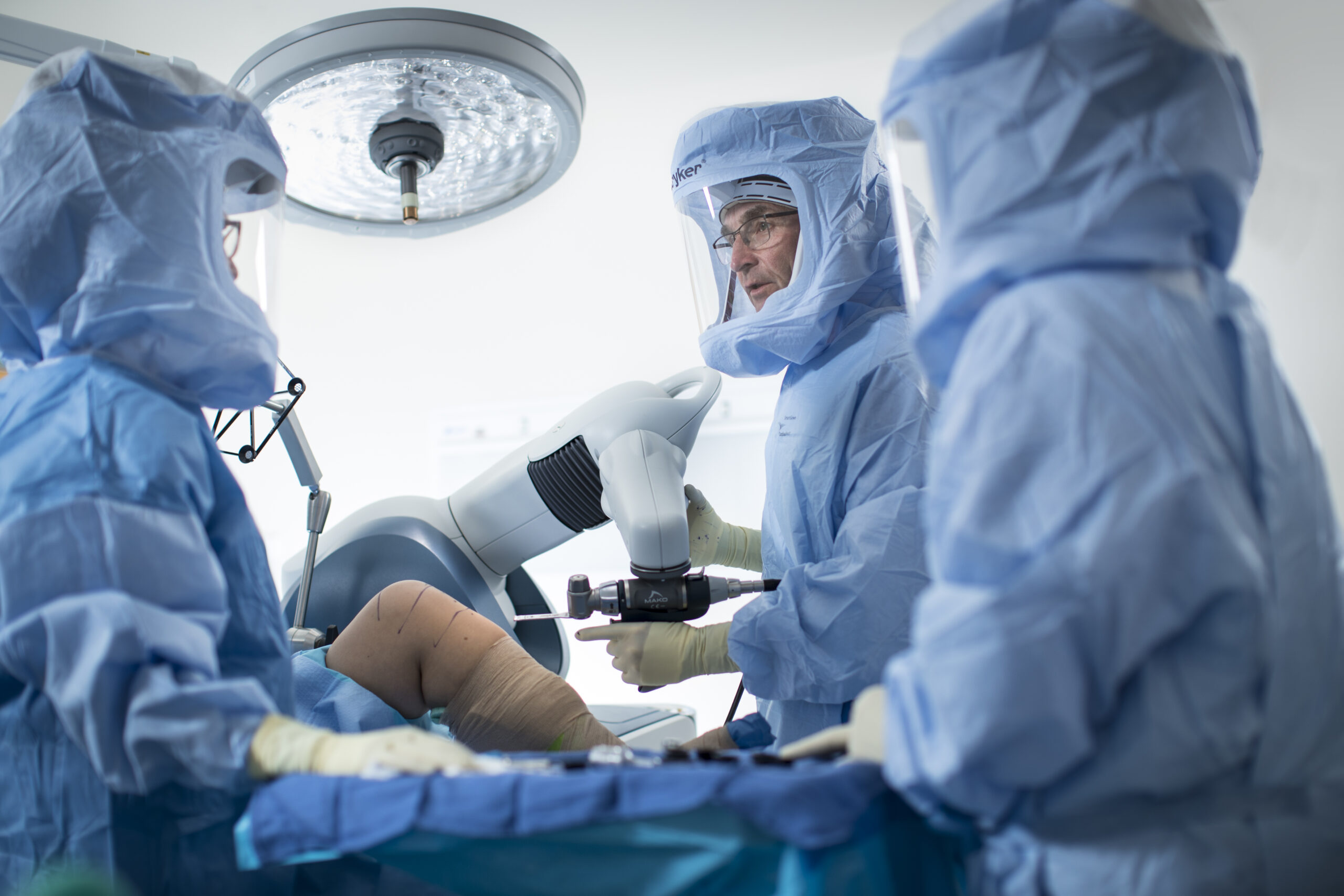 Of course, the Robot has its own cost. It is expensive and the patient will have to bear the burden of that to some extent and it is not fully covered by insurance yet. Some companies or corporate covers do, others don’t. Every penny spent on this advancement is worth its weight in gold and it will benefit the patients in the long run. The success rate is more than 98 per cent all over the world and our centre is one of the best and our results are similar to any international centre.
There is a saying, you have to run to be able to stand. If you do not progress and you do not keep pace with time and technology, you will be left behind. Of course, we are nowhere near perfection, but robotic surgery is a step in that direction. Numerotologists are doing great surveillance in inflammatory types of arthritis mostly because there are so many drugs available which can actually cure those diseases, for example, Rheumatoid arthritis and Closing Spondylitis can be very well controlled. So, it is very important, especially for inflammatory types of arthritis, to take the opinion of numerotologists.
(The author is a renowned orthopaedic surgeon, Apollo Hospital, New Delhi. He has done tremendous work in Spine Surgery and Joint Replacement. As youngest orthopaedic surgeon he has been awarded Padma Shree. He is an alumnus of prestigious Maulana Azad Medical College, New Delhi, Royal College of Surgeons, Ireland, and MCh from University of Liverpool, England.)