
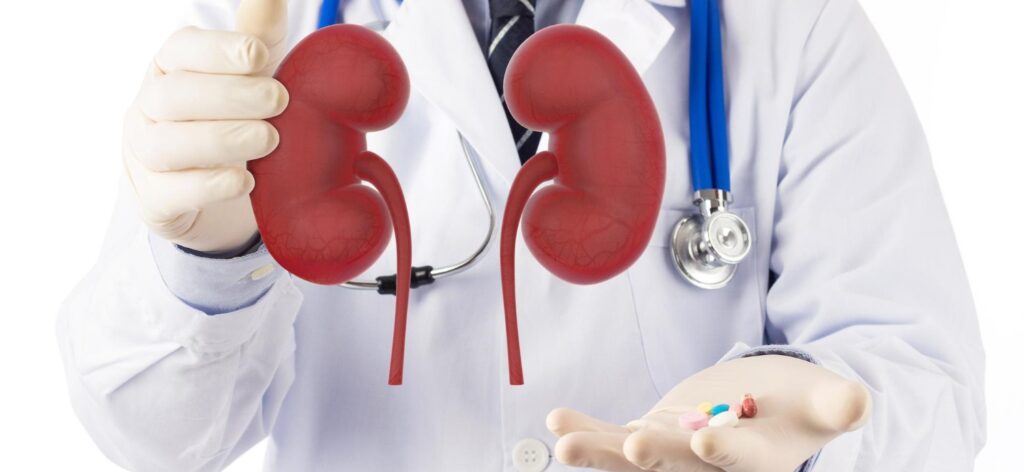
National Kidney Conclave 2026: Experts and Policymakers Unite to Tackle CKD
The Kidney Warriors Foundation successfully organized its maiden KWF Conclave 2026, commemorating 50 years of nephrology in India,, ahead of World Kidney Day recently. Experts called for dedicated national CKD guidelines and a stronger, coordinated response to address the rising disease burden. The conclave brought together leading nephrologists, policymakers, and patient advocates, while also recognising 24 doctors for excellence in nephrology. According to the World Health Organization (WHO), CKD is expected to become the fifth leading cause of life years lost by 2040. To address the rising burden of CKD and the urgent need to strengthen early detection and transplant access, KWF brought together leading kidney doctors, policymakers, hospital leaders, pharma and healthcare innovators, and patient advocates. Over the past five decades, India’s kidney-care ecosystem has evolved from limited specialty services to a comprehensive framework spanning prevention, dialysis, transplantation, research, and long-term patient support.
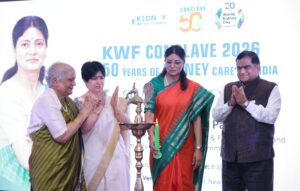

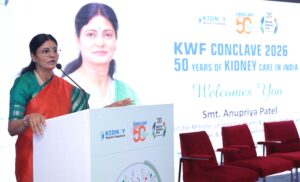
The event was graced by Chief Guest Anupriya Patel, Minister of State for Health & Family Welfare and Chemicals & Fertilizers, Government of India, who called CKD a “silent pandemic” and emphasised strengthening early detection and equitable dialysis access. She highlighted the growing public health challenge posed by CKD and detailed the progress of the Pradhan Mantri National Dialysis Programme (PMNDP), which provides free dialysis services at district hospitals. She also launched Hindi translation of two books, “The Kidney Warrior – Edition 2” and “CKD Prevention Program Advocacy and Guidance” authored by Vasundhara Raghavan. The books aim to provide inspiration and practical guidance and are available in both English and Hindi to ensure wider accessibility. During her keynote address, Anupriya Patel identified CKD as one of the biggest causes of mortalities. “Kidney health is a very serious issue which demands attention and deserves to be a health priority in our country. We want to promote healthier lifestyles, screening, and early diagnosis, and the last step is promoting ensuring equitable access to dialysis services as well as transplant care,” she said. Vasundhara Raghavan, Founder, Kidney Warriors Foundation, said, “CKD can no longer be viewed only as a complication of diabetes or hypertension and managed under generic NCD guidelines. In 2026, CKD is far more complex — driven by genetic disorders, emerging glomerular diseases, childhood anomalies, and environmental factors. Through discussions on early detection, transplant access, innovation, and patient- centred care, we have reinforced the urgent need for dedicated national CKD guidelines that prioritise prevention, equitable access, and holistic support — not just dialysis and transplant care. This conclave is a clear call to action, uniting the government, nephrologists, patients, and industry to drive a stronger, coordinated national response to CKD in India.” The Conclave featured specialised panel discussions on the evolution of nephrology in India and way forward. Experts deliberated on strengthening India’s CKD response through improved policy integration, stronger public health systems, expanded access to dialysis and transplantation and early detection to reduce late diagnosis. Discussions also covered innovation in kidney care, including organ donation awareness and the role of emerging technologies and AI, along with sessions on post-transplant management and mental health support for patients and caregivers.
KWF stands as one of India’s largest independent networks of kidney patients, caregivers, healthcare professionals, and volunteers.
Dr Vivekanand Jha, Executive Director of the George Institute, called for a strategic shift in how the medical community approaches screening. He said, “I would suggest that we move away from using the word screening to early detection. It is important that we as physicians and other members involved in the healthcare community first recognise and identify who are the people who are at increased risk of developing kidney disease.”
Dr Saurabh Sharma from Safdarjung Hospital focused on the daily realities of dialysis and introduced a vital management philosophy for patients: ” The 3D is a wonderful framework which stands for self-Determination, Diet, and Discipline.”
Dr Sanjeev Gulati, Chairman, Nephrology at Fortis Hospitals, New Delhi, provided a balanced perspective on the integration of technology where he mentioned, “AI will not replace kidney doctors but yes kidney doctors with AI will replace kidney doctors who are not using AI.”
Dr Kristin George from Aster Hospital addressed the complexities of life after surgery, reminding the audience that maintenance is an ongoing journey. He said, “Transplant we all know is the best treatment for end-stage kidney disease but unfortunately transplant is not a miracle cure.”
Dr Urmila Anandh, Head of Nephrology, Amrita Hospital, emphasised how modern environmental factors are creating new challenges for kidney health. She said, “There is a dramatic change in causes of CKD and a change which is coming into a focus is obesity. Obesity is now becoming a disease and almost 10 per to 30 per cent of patients who are obese actually have some form of kidney disease.”
Patient advocate Mrs Reetuparna Banerjee shared her lived experience where she said, “Our kidneys, when in trouble, whisper to us in the form of different signs and if we listen to them, get diagnosed and treated on time, we can delay dialysis for good 10 to 15 years.”
Another patient advocate, Shantanu Saha shared his lived experience with Autosomal Dominant Polycystic Kidney Disease (ADPKD), “I have lived with chronic kidney disease for nearly three decades and have undergone two transplants and a bilateral nephrectomy. With dialysis costing around ₹60,000 per month in most hospitals, this incurable disease places an unbearable financial burden on families. The government must ensure financial support for all dialysis patients, regardless of where they receive treatment, so that life-saving care remains accessible.” The event also recognised pioneers in kidney care and honoured 24 leading doctors for excellence in nephrology, including Padma Shri Dr Hemant Kumar, Padma Shri Dr Devendra Singh Rana, and Dr Sanjeev Gulati, along with several individuals for their significant contributions to kidney care in India. The conclave concluded with a call for a unified, holistic approach to kidney care, emphasising routine screening, organ donation awareness and mental health support, while bringing together government, clinicians, the medical fraternity, and patient advocacy groups under a single vision to address India’s growing CKD burden.
ABOUT KIDNEY WARRIORS FOUNDATION
The Kidney Warriors Foundation (KWF) is a national, patient-led organisation representing the collective voice of India’s kidney community. Established in 2017 by kidney patients, caregivers, and their families, KWF emerged from the personal experiences of individuals who faced the challenges of CKD and recognised the urgent need for a united platform to advocate, support, and empower.
Today, KWF stands as one of India’s largest independent networks of kidney patients, caregivers, healthcare professionals, and volunteers — united in their mission to improve lives through awareness, advocacy, access, and action.