
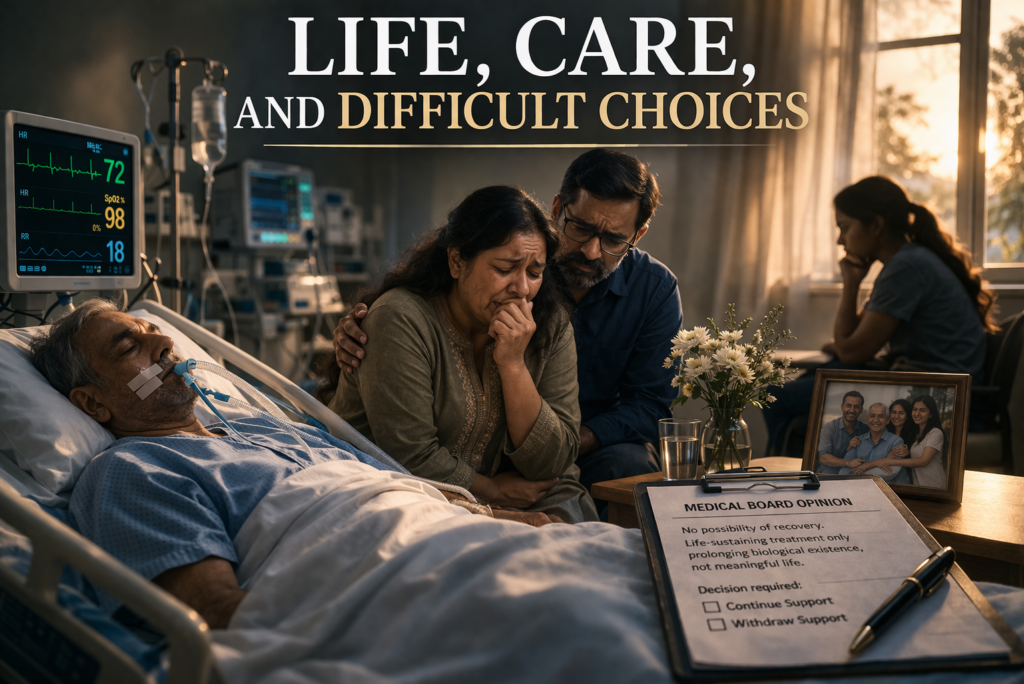
Life, Care, and Difficult Choices
Dear Readers,
This month, Double Helical takes up a subject that is as emotional as it is complex—euthanasia. Our cover story is not just about a legal judgment; it is about a family’s long struggle, a patient’s silent suffering, and a society learning to confront uncomfortable questions.
The Supreme Court’s decision in the case of Harish Rana brings the debate into sharp focus. After living for 13 years in a permanent vegetative state, sustained entirely by medical support, the Court allowed withdrawal of life-sustaining treatment, recognising that continuing intervention was only prolonging suffering, not life in any meaningful sense. This raises a deeply human question: is it enough for the body to survive, or must life also have awareness, dignity, and some quality? Modern medicine has the power to extend life, but it does not always restore it. And when recovery is no longer possible, families and doctors are left navigating a difficult space between hope and reality. India has taken cautious steps by allowing passive euthanasia under strict safeguards. But this is not the end of the debate—it is the beginning of a more honest conversation. We need clearer systems, stronger ethical frameworks, and, above all, sensitivity towards patients and families who face such decisions. Alongside this, another important and equally sensitive issue in this issue is the debate around the HPV vaccine
The article raises uncomfortable but necessary questions. Cervical cancer typically develops decades after exposure, yet most vaccine trials have followed participants for less than ten years. This gap between expectation and evidence needs careful attention. The concern is not about rejecting prevention, but about ensuring that public health decisions are based on strong, long-term data rather than urgency or publicity.
The piece also revisits troubling episodes from past trials in India, where ethical lapses and inadequate safeguards raised serious concerns. It reminds us that trust in healthcare cannot be taken for granted—it has to be earned through transparency, accountability, and rigorous science. At the same time, the larger message is clear: prevention must go beyond vaccines. Awareness about safe practices, hygiene, and responsible behaviour remains equally important in reducing the burden of disease. These debates—on euthanasia and vaccination—may seem very different, but they are connected by a common thread: the need to balance science with ethics, and policy with people.
The rest of the issue brings into focus the changing health profile of India and the region. Metabolic diseases such as diabetes, obesity, and hypertension are rising rapidly across Asia, driven by lifestyle changes , urbanisation, and stress. These are no longer diseases of old age; they are appearing earlier and lasting longer, increasing the risk of serious complications. Similarly, the growing concern around chronic kidney disease (CKD) underscores the urgent need for systemic reform. Experts now warn that CKD could become one of the leading causes of life years lost globally by 2040. The call for dedicated national guidelines, early detection, and equitable access to dialysis and transplantation reflects a larger truth: healthcare cannot remain reactive; it must become anticipatory.
At the other end of the spectrum lies the silent but significant rise of hypertension among children—once considered an adult disease. The shift is emblematic of changing lifestyles, where early exposure to unhealthy diets, inactivity, and stress is manifesting in chronic conditions at younger ages. Left unchecked, these trends threaten to create a generation burdened with lifelong morbidity. Equally concerning is the growing prevalence of infertility in urban India. With nearly 30 million couples affected, and increasing reliance on assisted reproductive technologies, infertility is no longer a private struggle but a public health issue. It reflects broader societal changes—delayed parenthood, lifestyle stress, environmental factors—and calls for both medical innovation and social sensitivity.Meanwhile, the global cancer burden continues to rise, with projections indicating a near doubling of cases by 2050. The theme of World Cancer Day 2026—“United by Unique”—reminds us that while cancer is universal, responses must be localised, equitable, and patient-centred. Access to early diagnosis, treatment, and palliative care remains uneven, particularly in low- and middle-income regions. Taken together, these stories reflect a healthcare system in transition. We are dealing with new diseases, new technologies, and new dilemmas. But the core challenge remains the same: how do we make healthcare more humane? The answer lies not just in better hospitals or advanced treatments, but in how we approach care itself. It lies in listening to patients, supporting families, questioning assumptions, and making decisions that are both scientifically sound and ethically responsible.
The euthanasia debate, in many ways, brings this into sharp relief. It forces us to think about what it means to live well—and what it means to die with dignity. As we move forward, healthcare must not lose sight of its most important purpose: to care, not just to cure.
Happy reading!
Thanks and regards
Amresh K Tiwary,
Editor-in-Chief